Move a few metres, brake, wait, move again—and repeat. In crowded Indian cities, this routine can continue for an hour or more. In such conditions, constantly operating a clutch and changing gears turns an ordinary commute into tiring work. An automatic car removes much of that effort and lets the driver concentrate more on traffic, pedestrians, two-wheelers and the road ahead.
However, not every automatic transmission behaves the same way in slow traffic. AMTs are generally affordable and efficient, CVT/IVT gearboxes prioritise smoothness, torque converters provide progressive operation, and DCTs focus more on quick shifts and performance. For everyday urban driving, low-speed smoothness, compact dimensions, visibility, fuel efficiency and ease of parking can matter more than outright power.
Here are 10 automatic cars worth considering for regular city use in India.
| Car | Automatic Type | Particularly Good For |
| Maruti Suzuki Swift | AMT | Mileage and daily commuting |
| Hyundai Grand i10 NIOS | AMT | Compact city use |
| Hyundai i20 | IVT | Smooth automatic driving |
| Honda Amaze | CVT | Comfortable city sedan |
| Hyundai Exter | AMT | Compact SUV-style practicality |
| Tata Punch | AMT | Rough urban roads |
| Maruti Suzuki Dzire | AMT | Family commuting |
| Renault Kiger | AMT/CVT | Affordable crossover |
| Nissan Magnite | AMT/CVT | Value-conscious buyers |
| Maruti Suzuki Brezza | Torque-converter AT | Family SUV buyers |
1. Maruti Suzuki Swift
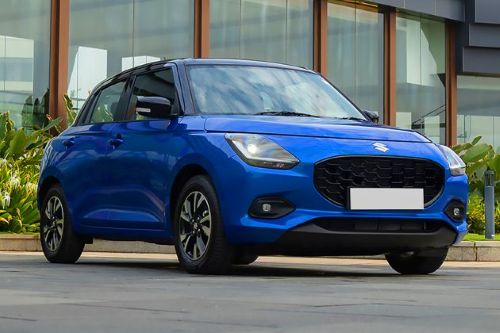
The Swift is an easy car to recommend to someone whose typical day consists of office commutes, school runs and congested urban roads.
Its AMT provides two-pedal convenience without making the car unnecessarily expensive or complicated. Compact exterior dimensions make narrow streets and parking easier, while the Swift’s relatively light controls suit frequent stop-and-go driving.
An AMT will not provide the seamless gear changes of a good CVT, so drivers should expect to feel some shifts at lower speeds.
Best for: Buyers seeking an economical everyday automatic hatchback.
2. Hyundai Grand i10 NIOS
The Grand i10 NIOS remains particularly well suited to cities because it combines compact dimensions with a comfortable and relatively feature-rich cabin.
Hyundai offers its 1.2-litre Kappa petrol engine with Smart Auto AMT across several variants. AMT versions also receive ESC, Vehicle Stability Management and Hill-start Assist depending on the trim.
The small footprint is useful in crowded markets and tight parking areas, while the hatchback layout remains practical for daily household requirements.
Best for: First-time automatic-car buyers and urban families.
3. Hyundai i20
If smoothness matters more than getting the cheapest possible automatic, consider the i20.
Hyundai pairs its 1.2-litre petrol engine with an IVT, its continuously variable transmission. Unlike an AMT, an IVT does not have the same noticeable pause between conventional automated gear changes.
That makes the i20 particularly pleasant when traffic repeatedly changes between crawling and moderate speeds. It also provides a more spacious and premium experience than smaller entry-level hatchbacks.
Best for: Buyers wanting a smooth, premium city hatchback.
4. Honda Amaze
A compact sedan can still be extremely convenient in a city, and the Amaze demonstrates why.
Its 1.2-litre petrol engine can be paired with a CVT. Honda lists the CVT version at 19.46 km/l under test conditions, while its 3,995 mm overall length keeps the car below four metres.
The CVT’s smooth operation is a major advantage in traffic. A 416-litre boot also makes the Amaze more useful when family luggage needs to be carried.
Best for: Families wanting CVT smoothness with sedan practicality.
5. Hyundai Exter
The Exter offers the high-seating-position appeal many Indian buyers want while remaining compact enough for everyday urban use.
Hyundai currently offers the Exter with both manual and automatic transmission choices. Its AMT is aimed at buyers wanting affordable automatic convenience rather than sporty performance.
The upright seating position can provide good outward visibility, while the compact body is easier to manage than a larger SUV in congested areas.
Best for: City buyers wanting an SUV-like driving position in a small package.
6. Tata Punch
Poorly surfaced roads, tall speed breakers and potholes are part of everyday driving in many Indian cities. This is where the Punch’s crossover-like approach becomes useful.
Its AMT option eliminates clutch operation while retaining the practicality and raised stance that have made the Punch popular among urban buyers.
As with other AMTs, gear changes can sometimes be noticeable. Drivers prioritising affordability and rough-road usability, however, may consider that a reasonable compromise.
Best for: Urban driving where road conditions are inconsistent.
7. Maruti Suzuki Dzire
The Dzire makes sense for buyers who want something more family-oriented than a small hatchback without moving to a large vehicle.
Its AMT provides convenient two-pedal driving, while the compact sedan format offers useful rear-seat and luggage practicality. For families regularly combining city commuting with occasional highway travel, this balance can be more useful than simply choosing the smallest automatic available.
Maruti’s widespread service presence is another practical consideration for long-term ownership.
Best for: Small families needing an efficient automatic sedan.
8. Renault Kiger
The Kiger gives buyers an interesting choice because automatic convenience is available in different forms.
Depending on the engine and variant, buyers can find both AMT and CVT configurations. The AMT is the more budget-focused solution, while the turbo-petrol CVT is better suited to someone willing to pay more for smoother acceleration.
Its compact crossover dimensions and useful ground clearance also suit Indian urban conditions.
Best for: Buyers wanting an affordable crossover with automatic options.
9. Nissan Magnite
The Magnite is another value-focused compact SUV that works well for drivers moving from a manual car to an automatic.
Depending on the powertrain, automatic choices include AMT and CVT. The CVT paired with the turbo-petrol engine is particularly appealing for buyers who encounter frequent traffic but also want stronger performance for occasional highway use.
Its compact proportions help prevent the SUV styling from becoming a disadvantage in tight city spaces.
Best for: Buyers seeking value, SUV styling and automatic convenience.
10. Maruti Suzuki Brezza
The Brezza is larger than the hatchbacks on this list but remains manageable enough for everyday urban driving.
A major difference is its conventional torque-converter automatic rather than an AMT. Torque converters generally provide smoother low-speed behaviour and predictable acceleration, characteristics that work particularly well in congested traffic.
The Brezza is therefore worth considering when you need a practical family SUV but still spend most weekdays driving through the city.
Best for: Families wanting a comfortable automatic compact SUV.
AMT, CVT or Torque Converter: Which Is Better in the City?
For buyers on a tighter budget, AMT is often the most accessible route to clutch-free driving. The compromise is that gear changes may occasionally feel slow or noticeable.
A CVT or IVT is generally smoother in stop-start traffic because it does not shift through conventional fixed ratios in the same manner. This makes cars such as the Amaze CVT and i20 IVT particularly suitable for relaxed urban commuting.
A torque-converter automatic offers smooth take-off and predictable low-speed behaviour and can be a good choice when moving into larger or more powerful cars.
DCTs provide quick shifts and stronger performance, but buyers who spend most of their time in crawling traffic should evaluate the particular vehicle carefully rather than assuming that a more sophisticated gearbox is automatically better for city use.
FAQs
Q1. Which automatic transmission is best for heavy city traffic?
A: CVT/IVT and good torque-converter automatics generally provide particularly smooth low-speed operation. AMTs are more affordable but can produce noticeable pauses during gear changes.
Q2. Is an AMT car good for daily city driving?
A: Yes. An AMT removes the need to operate the clutch and is often one of the most affordable automatic options. It works especially well for buyers who prioritise convenience and fuel economy over perfectly smooth shifts.
Q3. Does an automatic car consume more fuel than a manual?
A: Not necessarily. Modern automatic transmissions can be quite efficient, and the difference depends heavily on the gearbox, engine and driving conditions. Some AMTs can achieve fuel-efficiency figures close to their manual counterparts.
Q4. What should I check during an automatic-car test drive?
A: Do not test the car only on an open road. Drive it through slow-moving traffic, parking manoeuvres, inclines and repeated stop-start situations. Check how smoothly it moves from rest, responds at low speed, reverses and accelerates when a gap appears in traffic. Those behaviours matter far more in everyday city driving than a short high-speed test.