Travelling with six or seven people changes what matters in a car. A third row on the specification sheet is not enough. When grandparents, children and luggage are all coming along, families need comfortable seating, easy third-row access, effective rear AC, adequate storage and an engine that does not feel overwhelmed with a full passenger load.
India now offers three-row vehicles ranging from affordable MPVs to rugged SUVs and premium family cars. Some are genuinely comfortable with seven occupants, while others are better considered occasional seven-seaters. Here are 10 options worth considering for a large Indian family.
1. Maruti Suzuki Ertiga
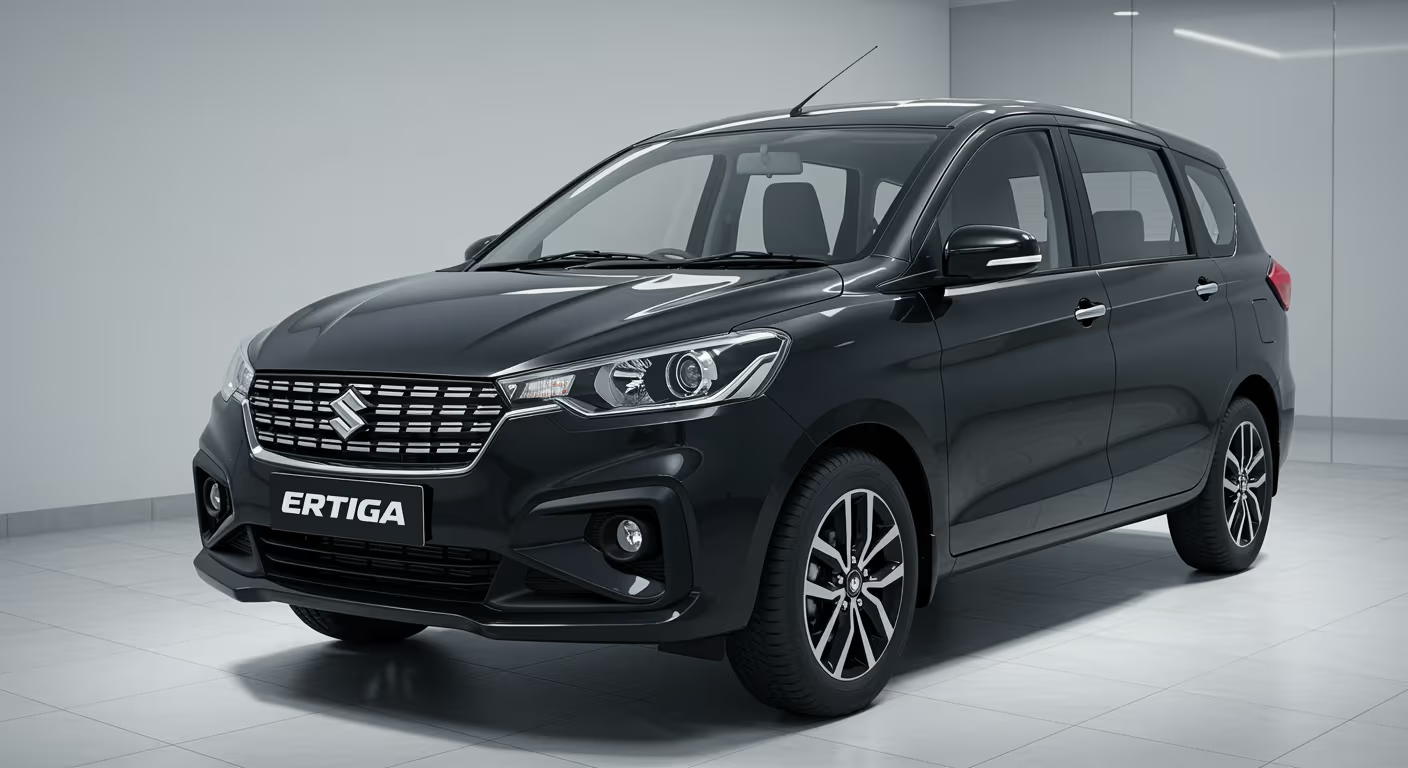
The Ertiga remains one of the most practical choices for families that genuinely need seven seats without moving into an expensive SUV.
Its MPV-style cabin makes better use of available space than many similarly priced compact SUVs. The relatively easy entry, flexible second and third rows and comfortable ride make it particularly suitable for children and elderly passengers.
Petrol and factory-fitted CNG choices also give high-mileage families an opportunity to control running costs.
Best suited for: Families wanting affordability, mileage and straightforward ownership.
2. Toyota Rumion
The Toyota Rumion follows essentially the same family-friendly formula as the Ertiga, making it another sensible seven-seat MPV.
Rather than chasing rugged SUV styling, the Rumion concentrates on the basics a large household actually uses: three-row seating, manageable exterior dimensions and economical powertrain choices.
It deserves consideration from buyers who appreciate the Ertiga package but prefer purchasing and maintaining their vehicle through Toyota’s network.
Best suited for: Practical family transportation with low ownership complexity.
3. Kia Carens Clavis
The Carens Clavis is especially interesting because its cabin has been developed around three-row usability rather than simply adding two seats behind a conventional SUV.
It measures 4,550 mm long and has a 2,780 mm wheelbase. The seven-seat configuration includes a sliding, reclining and tumbling 60:40 second row, while the 50:50 third row can recline and fold flat. Roof-mounted AC vents serve both rear rows. (kia.com)
Those details can make a substantial difference when seven people regularly travel together.
Best suited for: Large families wanting a spacious, feature-rich three-row vehicle.
4. Kia Carens
The regular Kia Carens continues to be relevant for buyers who want a family-oriented MPV with several powertrain choices.
Depending on the variant, Kia offers naturally aspirated petrol, turbo-petrol and diesel engines, with seven-seat configurations available across much of the range. (kia.com)
Its long wheelbase and MPV proportions make the rear rows more useful than the occasional third rows found in some SUVs.
Best suited for: Families prioritising passenger comfort and powertrain choice.
5. Mahindra Scorpio-N
For a family that frequently encounters broken roads, rural routes or challenging highway conditions, the Scorpio-N offers something very different from an MPV.
Its strong petrol and diesel engines are better suited to carrying passengers over demanding terrain, while its commanding driving position and substantial road presence appeal to traditional SUV buyers.
The trade-off is important: families focused entirely on easy ingress, maximum cabin flexibility and city manoeuvrability may find an MPV more convenient.
Best suited for: Large families wanting a powerful, rugged SUV.
6. Mahindra XUV700
The XUV700 combines three-row family capability with considerably more technology and a more road-focused character than the Scorpio-N.
Its strong turbo-petrol and diesel engines make highway overtaking easier even when carrying several passengers. Higher variants also bring sophisticated convenience and driver-assistance technology.
For buyers who only occasionally need the third row but want a comfortable, powerful vehicle for long-distance family trips, the XUV700 remains an attractive option.
Best suited for: Highway-focused families wanting performance and technology.
7. Hyundai Alcazar
The Alcazar takes a more premium approach to the three-row family SUV.
Hyundai offers both six- and seven-seat layouts. In seven-seat versions, the second row gets a 60:40 split with sliding, reclining and tip-and-tumble functionality, while the third row has 50:50 split and reclining capability. (hyundai.com)
Its 1.5-litre turbo-petrol and 1.5-litre diesel engines are available with manual and automatic transmissions depending on the variant. (hyundai.com)
The Alcazar works particularly well for families that want premium features without moving to a substantially larger SUV.
Best suited for: Urban families wanting comfort, features and a manageable three-row SUV.
8. Tata Safari
The Safari is worth considering when road presence, cabin space and long-distance comfort rank highly.
Its three-row layout gives larger households greater flexibility than a conventional five-seat SUV, while the substantial dimensions make it feel more appropriate for extended highway journeys.
It is particularly attractive for buyers who want a distinctly SUV-like family vehicle rather than an MPV. Families planning to use all seven seats frequently should still take every regular passenger along for a test drive to judge third-row comfort personally.
Best suited for: Highway touring and families wanting a large SUV experience.
9. Mahindra Bolero Neo
Not every large family is looking for touchscreen-heavy interiors or premium upholstery. Some need a tough vehicle capable of handling rough roads and semi-urban or rural conditions.
That is where the Bolero Neo has a different appeal. Its diesel-powered, rear-wheel-drive-oriented SUV formula prioritises durability and utility.
However, its rear seating arrangement is not as comfortable or sophisticated as the conventional forward-facing third rows in family-focused MPVs. It should therefore be chosen for its ruggedness rather than simply because it can accommodate more passengers.
Best suited for: Rough-road and utility-oriented family use.
10. Kia Carens Clavis EV
Large families interested in going electric now have a rare option: a purpose-built three-row EV.
The Carens Clavis EV is available with a 2+3+2 seven-seat configuration, and Kia offers 42 kWh and 51.4 kWh battery choices depending on variant. (kia.com)
Its 2,780 mm wheelbase and 4,550 mm overall length mirror the space-efficient proportions expected from the Carens family. (kia.com)
For households with reliable home charging, an electric seven-seater can significantly change everyday running-cost calculations.
Best suited for: Large families ready to move to an EV.
What Should a Large Family Check Before Buying?
Do not judge a seven-seater while sitting only in the driver’s seat. Take the people who will regularly use the second and third rows to the showroom.
Pay particular attention to:
- Third-row space: Check knee room, headroom and seat height with actual passengers.
- Entry and exit: Elderly family members may struggle with a difficult third-row access mechanism.
- Rear AC: Separate vents for the second and third rows are valuable in Indian summers.
- Boot space with all seats occupied: Some seven-seaters leave very little luggage capacity when the third row is raised.
- Safety: Look for six airbags, ESC, three-point seat belts, appropriate head restraints and child-seat mounting provisions.
- Engine performance: Seven occupants plus luggage place substantially greater demands on the powertrain.
- Seating configuration: A seven-seater bench accommodates one additional person, while a six-seat captain-chair configuration can provide greater second-row comfort.
A family that travels with seven people every weekend has very different requirements from one that uses the third row only a few times each year.
FAQs
Q1. Which 7-seater car is best for a large family in India?
A: For frequent seven-person travel, family-focused MPVs such as the Ertiga, Carens and Carens Clavis deserve particular consideration because their cabins are designed around passenger practicality. Larger SUVs such as the Safari, XUV700 and Scorpio-N suit buyers who also want stronger performance and SUV characteristics.
Q2. Is an MPV better than an SUV for seven passengers?
A: Often, yes, when passenger space is the main priority. MPVs typically use their dimensions efficiently and can provide easier third-row access. SUVs may offer greater ground clearance, stronger engines and more rugged capability, so the better choice depends on how the vehicle will be used.
Q3. Is a 6-seater or 7-seater better for a family?
A: A seven-seater is better when maximum capacity matters. A six-seater with second-row captain chairs can be more comfortable and makes accessing the third row easier. Families should choose according to how many people actually travel together regularly.
Q4. Can adults comfortably use the third row of every 7-seater?
A: No. Third-row comfort varies considerably. In some cars it is suitable mainly for children or short journeys, while larger MPVs and SUVs provide more usable accommodation. Always test the third row with the passengers who will actually sit there before buying.