If you plan to hold Bitcoin, Ethereum or other cryptocurrencies for several years, choosing the right wallet becomes more important than having the fastest or most convenient way to trade. Long-term storage is mainly about protecting private keys from hacking, phishing, device failure and accidental loss.
For most people holding a meaningful amount of cryptocurrency for the long term, a reputable hardware wallet is generally more suitable than keeping everything on an exchange or ordinary internet-connected software wallet.
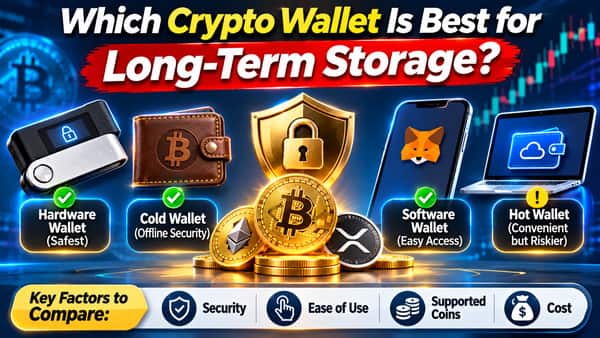
Devices from established hardware-wallet makers such as Ledger and Trezor are popular multi-asset options, while COLDCARD is designed specifically for Bitcoin users who want more advanced offline and air-gapped workflows. The best choice ultimately depends on which cryptocurrencies you own and how comfortable you are managing self-custody.
Why Is a Hardware Wallet Better for Long-Term Crypto Storage?
A hardware wallet is a physical device designed to keep the private keys used to authorize cryptocurrency transactions isolated from ordinary internet-connected environments.
This provides an important security advantage.
With a normal software wallet installed on a smartphone or computer, the device is regularly connected to the internet. Malware, phishing attacks or compromised software can therefore create additional risks.
A hardware wallet keeps critical signing operations on dedicated hardware.
When you want to send cryptocurrency, the transaction can be prepared using a computer or phone but must be authorized through the hardware device.
For long-term holders who rarely move their assets, this additional security can be more important than everyday convenience.
Does a Hardware Wallet Actually Store Your Cryptocurrency?
Technically, your cryptocurrency is not stored inside the physical wallet.
Crypto assets remain recorded on their respective blockchains.
The hardware wallet protects the private keys that allow you to control and spend those assets.
This distinction becomes important if your hardware wallet is:
- Lost
- Damaged
- Stolen
- Destroyed
- Replaced
Losing the physical device does not necessarily mean losing your cryptocurrency.
If you have correctly secured the wallet’s recovery information, you can generally restore access using a compatible replacement wallet.
The recovery backup can therefore be even more important than the physical hardware device itself.
Ledger: Strong Option for Multi-Crypto Long-Term Storage
Ledger hardware devices are widely used for storing multiple types of cryptocurrency.
Current devices such as the Ledger Flex use a CC EAL6+ Secure Element and provide a secure screen for reviewing transaction details. Ledger supports a broad range of digital assets, making it particularly useful for investors holding more than Bitcoin.
A Ledger device can be suitable for investors holding assets such as:
- Bitcoin
- Ethereum
- Solana
- Stablecoins
- Various supported tokens
- Other supported blockchain assets
Ledger devices generate and protect the keys required to control your crypto while allowing transactions to be reviewed and authorized on the physical device.
For someone who owns several cryptocurrencies and wants one long-term storage ecosystem, this broad asset support can be convenient.
Is Trezor Good for Long-Term Storage?
Trezor is another established hardware-wallet family frequently considered for self-custody.
One characteristic that has historically attracted technically minded users is Trezor’s strong emphasis on open-source design and transparency.
For long-term storage, important considerations when choosing any Trezor model include:
- Supported cryptocurrencies
- Hardware security architecture
- Backup options
- On-device transaction verification
- Passphrase support
- Compatibility with the software you intend to use
Trezor and Ledger take somewhat different approaches to hardware and software security, so declaring one universally safer oversimplifies the comparison.
For ordinary users, secure setup and backup practices can matter just as much as differences between reputable hardware-wallet brands.
COLDCARD: Strong Choice for Bitcoin-Only Storage
For someone focused specifically on Bitcoin, COLDCARD is an interesting alternative.
Current COLDCARD models are Bitcoin-only devices and support air-gapped transaction workflows. The COLDCARD Q, for example, provides QR scanning, MicroSD support and dual Secure Elements.
Air-gapped signing allows transactions to be signed without maintaining a direct data connection between the signing device and an internet-connected computer. Transaction information can instead move through methods such as QR codes or MicroSD cards.
This approach can appeal to advanced Bitcoin holders who want to minimize direct connectivity.
However, COLDCARD is not intended to be an all-purpose wallet for someone holding many different cryptocurrencies.
Hardware Wallet vs Software Wallet for Long-Term Storage
Software wallets can be very convenient.
They are often available as:
- Mobile apps
- Desktop applications
- Browser extensions
They can be useful when you frequently send cryptocurrency or interact with decentralized applications.
But convenience creates additional exposure because the wallet operates in an internet-connected environment.
For example, malware could potentially target the computer or phone, while phishing websites may attempt to trick users into revealing sensitive information or authorizing malicious transactions.
A practical approach can be:
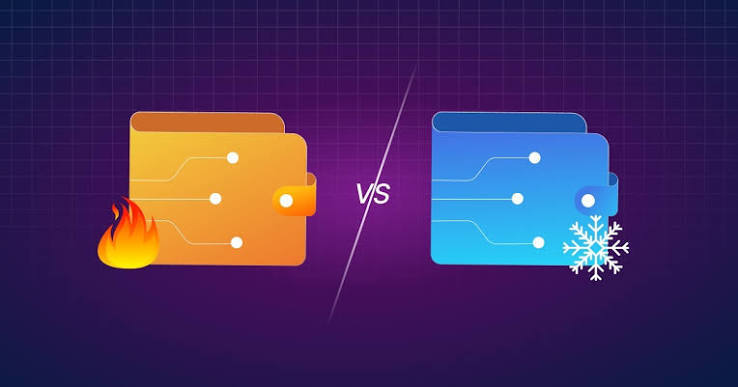
Software wallet: Smaller amounts needed for regular transactions.
Hardware wallet: Larger holdings intended for long-term storage.
This is similar to carrying a limited amount of spending money while keeping larger savings in a more protected location.
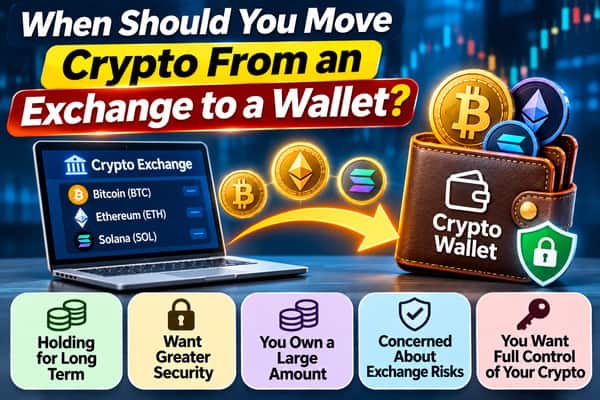
Is It Safe to Keep Long-Term Crypto on an Exchange?
Keeping cryptocurrency on an exchange is convenient because you do not need to manage private keys yourself.
However, it creates custodial risk.
The exchange controls the keys associated with the assets it holds for customers.
Problems could include:
- Exchange hacking
- Insolvency
- Withdrawal suspension
- Account restrictions
- Operational failures
- Account takeover
Crypto history contains several examples of exchanges failing and customers losing access to funds.
Self-custody removes some of these exchange-related risks, but it introduces a different responsibility: you become responsible for protecting access to the assets.
If you lose both the wallet access and its recovery information, there may be no company capable of restoring your cryptocurrency.
What Is a Recovery Phrase?
Many hardware wallets use a recovery phrase or similar backup mechanism that can restore access if the device is lost or damaged.
The recovery phrase effectively represents critical access information for the wallet.
Anyone who obtains it may potentially be able to restore the wallet and control its assets.
This means you should never:
- Send your recovery phrase through email.
- Share it through WhatsApp or Telegram.
- Store it in an ordinary cloud document.
- Take an unsecured screenshot.
- Enter it into an unknown website.
- Give it to someone claiming to be customer support.
The wallet manufacturer does not need your recovery phrase to provide ordinary technical support.
How Should You Store a Recovery Phrase Long Term?
Long-term storage creates risks beyond online hacking.
A paper backup can potentially be damaged by:
- Fire
- Water
- Humidity
- Accidental disposal
- Physical deterioration
Some long-term holders therefore use durable physical backups designed to withstand environmental damage. Metal recovery backups, for example, are intended to provide greater resistance to fire, water and corrosion than ordinary paper.
Regardless of the material used, the backup should be stored somewhere physically secure and accessible only to authorized people.
Avoid making unnecessary copies, because every additional copy can create another opportunity for theft.
What Happens if Your Hardware Wallet Company Disappears?
This is a useful question for anyone planning to hold cryptocurrency for decades.
Your cryptocurrency does not exist inside the manufacturer’s company servers simply because you use its hardware.
With wallets using widely supported recovery standards, it may be possible to restore the wallet using compatible software or hardware even if the original manufacturer eventually disappears.
However, compatibility depends on the wallet’s backup standard, derivation paths, cryptocurrency and configuration.
Before storing substantial funds for many years, understand how recovery works before an emergency happens.
Do not wait until the device fails to discover whether your backup is usable.
Should You Use a Passphrase?
Some hardware wallets support an additional passphrase beyond the standard recovery phrase.
This can provide another layer of protection because possession of the recovery words alone may not provide access to the passphrase-protected wallet.
But there is an important trade-off.
If you forget the passphrase, there may be no recovery mechanism.
For advanced users who understand the system, a passphrase can strengthen a long-term storage setup.
For beginners, adding complicated security features without understanding them can actually increase the probability of permanently losing access.
More complicated does not always mean safer.
What Is Multisignature Storage?
For very large Bitcoin holdings, some experienced users consider multisignature, or multisig.
Instead of one private key being sufficient to authorize a transaction, multiple keys are required.
For example, a 2-of-3 multisig wallet could require any two of three separate keys to approve spending.
The keys might be stored in different locations or on different hardware devices.
This can reduce dependence on a single device or key.
However, multisig adds significant complexity involving:
- Wallet configuration
- Backup procedures
- Key management
- Recovery
- Transaction signing
For an ordinary beginner holding a modest amount of crypto, a properly secured single hardware wallet may be easier to manage correctly.
Should You Keep All Crypto in One Hardware Wallet?
Not necessarily.
As portfolio value increases, some users may prefer to separate holdings.
For example:
- Long-term Bitcoin in one wallet
- Other long-term crypto in another
- Smaller spending balance in a software wallet
- Trading funds on an exchange
Separating funds can reduce the amount exposed if one wallet or account is compromised.
However, using too many wallets can create another problem: complicated backup management.
The security structure should remain simple enough that you can confidently maintain and recover it years later.
What Should You Check Before Buying a Hardware Wallet?
Do not choose a wallet based only on appearance or price.
Consider:
- Supported cryptocurrencies
- Security architecture
- Recovery options
- On-device transaction verification
- Firmware transparency
- Manufacturer history
- Wallet software compatibility
- Ease of use
- Passphrase support
- Multisig support, if needed
Purchase hardware wallets through the manufacturer’s official sales channel or a clearly authorized seller where possible.
A compromised or manipulated device can undermine the entire purpose of using hardware storage.
Which Wallet Is Best for Long-Term Crypto Storage?
There is no single wallet that is ideal for everyone.
For someone holding multiple cryptocurrencies, an established multi-asset hardware wallet from Ledger or Trezor can provide a practical combination of security and usability.
For someone primarily holding Bitcoin and comfortable with more advanced security procedures, a Bitcoin-focused device such as COLDCARD can provide additional options including air-gapped workflows.
The hardware brand, however, is only one part of long-term crypto security.
A high-quality hardware wallet cannot protect you if you expose the recovery phrase to a phishing website. Similarly, an extremely sophisticated security setup can become dangerous if it is so complicated that you cannot recover it.
For long-term storage, the strongest setup is usually one that combines offline key protection, secure backups, careful transaction verification and a recovery process you genuinely understand.
FAQs
Q1. Is a hardware wallet better than an exchange for long-term crypto storage?
A. A hardware wallet gives you direct control of your keys and reduces dependence on an exchange’s custody and withdrawal systems. However, it also makes you responsible for protecting and recovering those keys. Self-custody is most useful when you understand how to manage it securely.
Q2. What happens if my hardware wallet breaks after five years?
A. Your cryptocurrency remains on the blockchain. If your recovery information is correctly backed up and compatible recovery tools remain available, you can generally restore access using another compatible device or wallet.
Q3. Is a hardware wallet completely hack-proof?
A. No security system should be considered completely hack-proof. Hardware wallets reduce exposure to many online threats by isolating private keys, but users can still lose funds through phishing, malicious transaction approval, compromised backups, physical attacks or poor security practices.
Q4. Which wallet is better for long-term Bitcoin storage?
A. Bitcoin holders have several established hardware-wallet options. COLDCARD is particularly focused on Bitcoin and offers advanced air-gapped workflows, while Ledger and Trezor can be more convenient for users who also hold other cryptocurrencies. The best option depends on your technical knowledge, backup strategy and need for multi-asset support.