Car safety has moved far beyond airbags and ABS. A modern car can warn when the driver unintentionally leaves a lane, automatically brake when it detects a potential collision, monitor blind spots, maintain distance from the vehicle ahead and provide a 360-degree view while parking.
These technologies are useful, but there is an important distinction: advanced safety features cannot compensate for weak fundamental crash protection. The strongest safety package combines a well-engineered structure and restraint systems with electronic stability control (ESC), airbags and technologies such as ADAS. Bharat NCAP’s growing database now also gives Indian buyers independent adult and child occupant crash-test results for many vehicles.
Here are 10 cars and SUVs worth considering if advanced safety technology is a major buying priority.
1. Mahindra XEV 9e
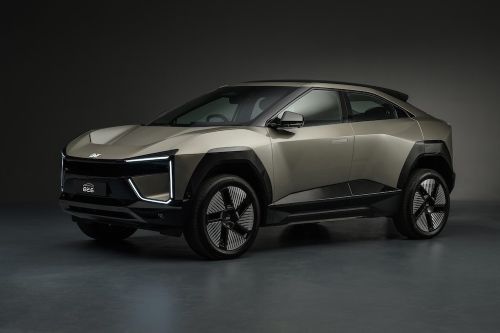
The XEV 9e stands out because it combines sophisticated active-safety technology with exceptional crash-test performance.
In Bharat NCAP testing, it achieved a perfect 32/32 for Adult Occupant Protection and 45/49 for Child Occupant Protection, earning five stars in both categories.
Higher configurations also bring an extensive ADAS package designed to assist with collision avoidance, lane positioning and highway driving. Even the underlying safety fundamentals are strong, with equipment such as six airbags, ISOFIX mounts, TPMS and rear disc brakes offered from the base version.
Safety highlight: Outstanding Bharat NCAP performance combined with modern driver assistance.
2. Mahindra BE 6
The BE 6 is another example of how India’s new generation of electric vehicles is pushing safety technology forward.
It scored 31.97/32 for adult protection and 45/49 for child protection in Bharat NCAP testing, giving it five-star ratings.
Its standard safety package includes six airbags, tyre-pressure monitoring, a rear camera, parking sensors and driver-drowsiness detection. Higher versions expand the technology with more sophisticated driver-assistance functions.
For buyers moving to an EV, this combination of passive and active protection is more meaningful than simply having a long ADAS feature list.
Safety highlight: Near-perfect adult crash-protection score.
3. Hyundai Creta
The Creta demonstrates how advanced safety technology is becoming available in mainstream family SUVs rather than remaining exclusive to luxury cars.
Hyundai offers six airbags as standard, while selected variants receive Hyundai SmartSense Level 2 ADAS with 19 functions.
Its available technologies include collision-avoidance assistance, lane-safety systems and adaptive cruise functions. Higher versions also provide a Surround View Monitor and Blind-Spot View Monitor, which can be genuinely useful in crowded Indian cities.
ESC, Vehicle Stability Management, Hill-start Assist and a highline tyre-pressure monitoring system further strengthen the package.
Safety highlight: Broad combination of city, highway and parking-assistance technology.
4. Hyundai Verna
Buyers who prefer sedans have access to surprisingly sophisticated safety technology in the latest Verna.
Hyundai currently equips the Verna with six airbags as standard, while the top configuration adds a centre-side airbag for a total of seven. ESC, Vehicle Stability Management, Hill-start Assist and ABS with EBD are also provided across the range.
Selected variants get Level 2 ADAS functions including Forward Collision-Avoidance Assist, Lane Keeping Assist, Blind-Spot Collision-Avoidance Assist and Lane Following Assist. Higher configurations can additionally provide Smart Cruise Control with Stop & Go, Rear Cross-Traffic Collision-Avoidance Assist and Safe Exit Warning.
Safety highlight: One of the most extensive ADAS packages available in a mainstream sedan.
5. Mahindra XUV700
The XUV700 helped bring sophisticated ADAS technology into a relatively accessible three-row Indian SUV.
Depending on the variant, its driver-assistance package includes functions designed to warn of potential forward collisions, assist with emergency braking, monitor lanes and reduce workload during highway cruising.
The XUV700 is particularly relevant for families because these active technologies accompany a large cabin and strong fundamental safety credentials; Mahindra notes that the XUV700 has earned a five-star Global NCAP rating.
For long-distance users, adaptive driver assistance can be especially useful, although the driver must remain attentive at all times.
Safety highlight: Strong combination of crash protection, ADAS and family practicality.
6. Tata Harrier
The Harrier is another family SUV where advanced safety extends beyond simply increasing the airbag count.
Selected versions offer ADAS functions intended to identify collision risks and provide assistance with lane discipline and other driving situations. Depending on configuration, buyers can also get useful technologies such as a 360-degree camera and electronic stability systems.
The Harrier family has also established strong crash-protection credentials, with Tata’s newer Harrier EV achieving a perfect 32/32 adult occupant score under Bharat NCAP.
Buyers should verify the safety equipment fitted to the exact Harrier powertrain and variant they intend to purchase rather than assuming every version has identical technology.
Safety highlight: Strong crash-protection philosophy combined with modern driver assistance.
7. Tata Safari
The Safari shares much of its engineering philosophy with the Harrier but adds three-row family practicality.
That makes advanced safety particularly relevant because the vehicle may regularly carry six or seven occupants. Higher variants provide ADAS technologies alongside features such as multiple airbags, electronic stability control and parking assistance.
For large families, occupant protection should be evaluated across all seating rows. Seat belts, head restraints and proper child-restraint provisions remain just as important as camera- and radar-based technology.
Safety highlight: Advanced safety in a three-row family SUV.
8. MG Astor
The Astor was among the earlier mainstream SUVs in India to make Level 2 ADAS a major selling point.
Depending on configuration, its driver-assistance technology includes Adaptive Cruise Control, Automatic Emergency Braking, Lane Keep Assist, Blind-Spot Detection and Rear Cross-Traffic Alert.
This is particularly useful for buyers who want a technology-heavy petrol SUV rather than an EV.
However, buyers should remember that the effectiveness of an ADAS system depends on road markings, weather, traffic behaviour, sensor visibility and operating conditions.
Safety highlight: Extensive Level 2 ADAS functionality in a mainstream petrol SUV.
9. Honda Elevate
Honda takes a slightly different approach to driver assistance through its Honda SENSING technology.
The Elevate’s safety-assistance package focuses on helping the driver identify hazards and maintain better control rather than overwhelming the cabin with technology. The model has recently received its first major facelift in India for 2026, with refreshed equipment and design while retaining its established petrol powertrain.
The Elevate remains especially relevant to family buyers looking for a naturally aspirated petrol SUV with driver-assistance technology.
As with every ADAS-equipped vehicle, buyers should check the exact equipment offered on the variant currently available at the dealership.
Safety highlight: Honda SENSING driver-assistance technology with family-SUV practicality.
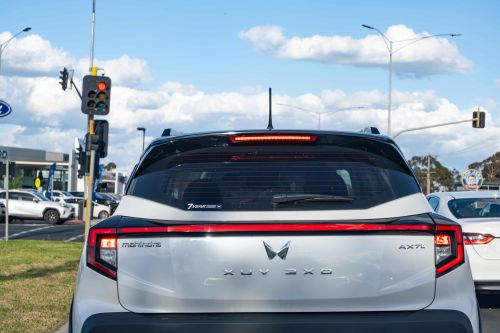
10. Mahindra XUV 3XO
Advanced safety technology is increasingly reaching smaller SUVs, and the XUV 3XO is an important example.
The model has achieved a five-star Bharat NCAP result, adding meaningful crash-test evidence to its safety proposition. Mahindra also groups it with the Thar Roxx and XUV400 among its Bharat NCAP five-star-rated vehicles.
Higher versions offer driver-assistance technology in addition to fundamental equipment such as airbags and stability-control systems.
This makes the XUV 3XO especially interesting for families who want advanced safety without moving to a substantially larger or more expensive SUV.
Safety highlight: Five-star crash protection with advanced technology in a compact package.
Which Advanced Safety Features Actually Matter?
A long equipment list can make every electronic feature appear equally important. They are not.
For most Indian buyers, start with the fundamentals:
- Airbags help protect occupants during certain types of collisions.
- ESC can help the driver maintain vehicle stability during loss-of-control situations.
- ISOFIX provides dedicated mounting points for compatible child restraints.
- Tyre Pressure Monitoring System warns about potentially unsafe tyre-pressure conditions.
- Automatic Emergency Braking (AEB) can intervene when the system identifies an imminent collision.
- Blind-Spot Monitoring can alert the driver to vehicles that are difficult to see in mirrors.
- Lane Keeping Assist can provide steering assistance when the vehicle unintentionally moves out of its lane.
- Adaptive Cruise Control can automatically adjust speed to maintain a set distance from traffic ahead.
- Rear Cross-Traffic Alert is particularly useful when reversing from parking spaces.
- 360-degree cameras improve awareness around the vehicle during low-speed manoeuvres.
Features such as AEB can potentially help prevent an accident. A 360-degree camera primarily assists with manoeuvring. Understanding that difference is more useful than simply counting safety features.
ADAS Does Not Make a Car Self-Driving
This is one of the most important points for buyers considering an ADAS-equipped vehicle.
Even when a manufacturer describes a system as Level 2 ADAS, the driver remains responsible for controlling the vehicle and monitoring the road. Level 2 technology can assist with functions such as steering, braking and acceleration under specified conditions; it does not turn the vehicle into an autonomous car.
Indian roads also present difficult situations for camera- and radar-based systems: faded lane markings, motorcycles filtering through traffic, pedestrians, animals, unusual road layouts and unpredictable vehicle behaviour.
ADAS should therefore be treated as an additional safety layer, not a substitute for attentive driving.
FAQs
Q1. Is ADAS more important than a five-star crash rating?
A: They address different stages of an accident. ADAS may help avoid or reduce certain collisions, while crash protection determines how effectively the vehicle protects occupants when an impact occurs. Ideally, choose a car that performs strongly in both areas.
Q2. Which cars have Level 2 ADAS in India?
A: Several vehicles now offer Level 2 systems, including selected variants of the Hyundai Creta and Verna, along with vehicles such as the MG Astor and newer Mahindra models. The exact functions vary considerably between cars and variants.
Q3. Can automatic emergency braking prevent every accident?
A: No. AEB performance depends on speed, sensor visibility, road conditions, the type of obstacle and the system’s operating limits. Drivers must never deliberately rely on AEB instead of braking themselves.
Q4. Should I pay extra for an ADAS variant?
A: It can be worthwhile if the higher variant provides useful technologies such as AEB, blind-spot assistance and adaptive cruise control and fits your budget. However, prioritize strong structural crash protection, airbags, ESC, proper seat belts and child-restraint provisions before paying extra purely for an impressive ADAS feature count.