A 360-degree camera may sound like a luxury feature until you use one in a crowded Indian parking area. When motorcycles are passing close to the doors, a concrete pillar is hidden below the window line and the front bumper is approaching a wall, seeing the car’s surroundings from multiple angles can make manoeuvring considerably easier.
The system generally uses cameras at the front, rear and beneath or around the side mirrors. Software combines these feeds to create a simulated top-down view on the infotainment display. Some newer systems go further with blind-view displays, multiple selectable camera angles and transparent or 3D-style visualisations.
Here are 10 cars in India worth considering if a 360-degree camera is high on your feature list.
1. Mahindra XUV 3XO
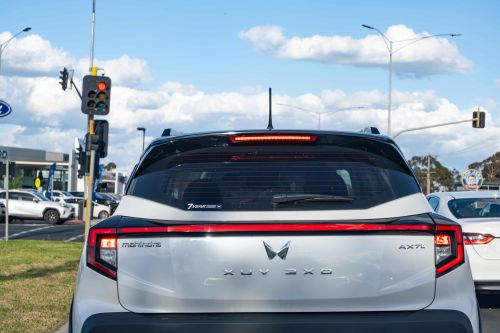
The XUV 3XO is one of the more affordable SUVs to offer sophisticated camera technology.
Mahindra currently lists a 360-degree Surround View System on the higher AX7 L configuration, alongside Level 2 ADAS and an electronic parking brake with Auto Hold.
The feature is especially useful because the XUV 3XO has a relatively wide body for a sub-four-metre SUV. A surround-view system can make judging its corners much easier in tight parking spaces.
For buyers wanting a compact family SUV with premium technology without moving into a much larger vehicle, it is a particularly compelling option.
Best for: Compact-SUV buyers wanting advanced parking technology.
2. Kia Sonet
The Sonet combines small exterior dimensions with an impressive collection of technology.
Kia currently offers a 360-degree camera with Blind View Monitor in the instrument cluster on higher versions such as the GTX+ and X-Line.
The Blind View Monitor is a useful addition because it can display a camera view when changing direction, helping the driver identify vehicles or motorcycles that may otherwise be difficult to see.
Since the Sonet is already compact enough for congested cities, the surround-view system makes parking even easier.
Best for: Technology-focused city drivers.
3. Hyundai Creta
The Creta is larger than sub-four-metre SUVs, which makes its Surround View Monitor particularly useful.
Hyundai’s current specifications show the Surround View Monitor (SVM) on selected higher variants. It is accompanied by a Blind-Spot View Monitor on those configurations.
The system provides a complete view around the SUV when manoeuvring, while front parking sensors on selected variants add another useful layer of assistance.
This combination is valuable for families that want midsize-SUV space but still need to negotiate tight urban parking areas every day.
Best for: Families wanting a feature-rich midsize SUV.
4. Tata Nexon
The Nexon is another compact SUV available with surround-view camera technology on selected configurations.
This feature complements the Nexon’s raised driving position particularly well. A high seating position gives the driver a good view farther ahead, but objects immediately beside the bumper or below the window line can still be difficult to judge.
A surround-view camera helps fill those visibility gaps.
For owners regularly parking in apartment basements or crowded streets, it can be one of the more practically useful upgrades available on higher Nexon variants.
Best for: Families dealing with congested streets and difficult parking.
5. Maruti Suzuki Fronx
The Fronx demonstrates how premium parking technology has moved into relatively compact crossovers.
Selected higher versions provide a 360-degree view camera, adding another convenience advantage to a vehicle already well suited to urban use.
Because the Fronx measures less than four metres in length, it is naturally easier to manoeuvre than larger SUVs. Combining that compact footprint with a surround-view system makes it particularly suitable for buyers who spend most of their time in cities.
Best for: City commuters wanting a compact crossover with premium features.
6. Maruti Suzuki Grand Vitara
Moving up to the midsize-SUV category brings more passenger space but also larger dimensions to judge while parking.
Selected Grand Vitara variants address this with a 360 View Camera that provides additional visual information around the SUV.
It can be particularly useful when approaching high kerbs, manoeuvring through narrow gates or positioning the vehicle inside a tight parking bay.
The Grand Vitara also offers petrol and strong-hybrid powertrain choices, making it attractive to buyers who want both urban efficiency and family-SUV practicality.
Best for: Families wanting a fuel-efficient midsize SUV with parking assistance.
7. Toyota Urban Cruiser Hyryder
The Toyota Urban Cruiser Hyryder is closely related to the Grand Vitara and similarly offers surround-view technology on selected higher variants.
A 360-degree camera is particularly useful in this size of vehicle because midsize SUVs can be noticeably more difficult to position than hatchbacks or compact crossovers.
The Hyryder is also available with strong-hybrid technology, making it particularly relevant for buyers who spend substantial time in urban traffic and want lower petrol consumption alongside premium convenience equipment.
Best for: Urban family users considering a hybrid SUV.
8. Hyundai Alcazar
A 360-degree camera becomes even more valuable as the vehicle gets longer.
The Alcazar’s three-row cabin makes it useful for larger families, but those additional dimensions naturally require more attention when parking. Hyundai addresses this on higher configurations with its Surround View Monitor technology.
The system works particularly well alongside other parking and safety assistance features. Drivers can use the additional camera perspectives to better understand where the SUV sits relative to surrounding objects.
For families moving from a hatchback or compact SUV to a larger three-row vehicle, that extra visibility can significantly reduce parking stress.
Best for: Large families wanting a technology-rich three-row SUV.
9. Mahindra XUV700
The XUV700 combines a large family-friendly cabin with an extensive technology package.
Selected higher variants offer a surround-view camera system that is particularly valuable given the SUV’s substantial dimensions. When reversing or negotiating narrow areas, seeing multiple sides of the vehicle reduces dependence on guesswork.
The XUV700 also offers advanced driver-assistance features on selected variants, so the camera forms part of a broader technology package rather than functioning as an isolated convenience feature.
Best for: Buyers wanting a large, powerful and technology-heavy family SUV.
10. Mahindra XUV 3XO EV
Electric-car buyers can also access sophisticated surround-view technology without entering the luxury segment.
Mahindra launched the XUV 3XO EV in 2026 with a 360-degree Surround View System with Blind View Monitor on the relevant higher configuration. The model also offers Level 2 ADAS functions including Lane Keep Assist, Automatic Emergency Braking and Adaptive Cruise Control.
That combination makes the system useful beyond parking. Blind-view monitoring can provide additional visual information during everyday driving, while the compact dimensions remain convenient in cities.
Best for: EV buyers wanting advanced camera and driver-assistance technology.
Why Is a 360-Degree Camera Useful in India?
The technology is particularly relevant to Indian driving conditions because parking spaces are not always clearly marked or generously sized.
A surround-view system can help with:
- Tight parking spaces: Makes it easier to judge both sides of the car.
- Narrow roads: Helps when passing close to walls, parked vehicles or other obstacles.
- High kerbs: Side-camera views can help protect alloy wheels from accidental contact.
- Basement parking: Useful around pillars and tight ramps.
- Large SUVs: Reduces uncertainty about areas hidden below the driver’s normal line of sight.
- Reversing: Provides significantly more surrounding information than a conventional rear camera alone.
- Front bumper clearance: Helps when parking close to walls or another vehicle.
Hyundai, for example, describes the Creta’s Surround View Monitor as providing a complete 360-degree visual of the surroundings for easier parking and greater awareness.
Is a 360-Degree Camera a Safety Feature?
It is better considered a visibility and parking-assistance feature than a substitute for core safety equipment.
A 360-degree camera can potentially help the driver notice an obstacle, but it does not replace essentials such as airbags, ABS, ESC, effective seat belts and good crash protection.
Drivers should also continue checking mirrors and physically looking around the vehicle. Cameras can have blind areas, distorted perspectives or reduced visibility because of dirt, rain and poor lighting.
What Should You Check Before Buying?
Do not assume every variant of a car listed here gets the feature.
Manufacturers often reserve surround-view cameras for higher trims. The Creta’s current feature chart, for example, shows the Surround View Monitor only on selected configurations rather than throughout the range.
During a dealership test drive, check:
- Camera image resolution
- Performance at night
- Delay when changing camera views
- Bird’s-eye image quality
- Front and rear camera angles
- Side-camera visibility
- Dynamic parking guidelines
- Screen size and clarity
- Whether individual camera views can be manually selected
A high-resolution, well-calibrated system is considerably more useful than simply having “360-degree camera” written on the specification sheet.
FAQs
Q1. Which affordable car in India has a 360-degree camera?
Several relatively affordable compact vehicles now provide the feature on selected higher variants. The Mahindra XUV 3XO is one notable example, with Mahindra listing a 360-degree Surround View System on its AX7 L configuration.
Q2. Does the Kia Sonet have a 360-degree camera?
Yes. Kia currently lists a 360-degree camera with Blind View Monitor on higher Sonet configurations including the GTX+ and X-Line.
Q3. Does the Hyundai Creta have a 360-degree camera?
Yes, selected Creta variants offer Hyundai’s Surround View Monitor. Higher configurations can combine it with the Blind-Spot View Monitor, front parking sensors and other driver-assistance technologies.
Q4. Is a 360-degree camera worth paying extra for?
It can be worthwhile if you regularly drive in congested cities, use tight basement parking or own a larger SUV. However, it should not take priority over essential safety equipment. If the feature requires a substantial jump to a higher variant, compare the complete package of additional equipment before deciding.