A steep basement ramp, an oversized speed breaker, a waterlogged street or a badly broken village road can expose something that is easy to ignore during a showroom visit: ground clearance. On Indian roads, those extra millimetres beneath the car can determine whether you cross an obstacle comfortably or hear an unpleasant scrape from underneath.
Higher ground clearance is especially useful for buyers who frequently encounter poor roads, construction zones, unpaved routes or mountain terrain. However, the biggest number does not automatically make a vehicle better. Wheelbase, suspension travel, approach and departure angles, tyre size and how much the suspension compresses with passengers and luggage also affect real-world capability.
With that in mind, here are 10 cars and SUVs in India worth considering when generous ground clearance is a priority.
1. Mahindra Thar
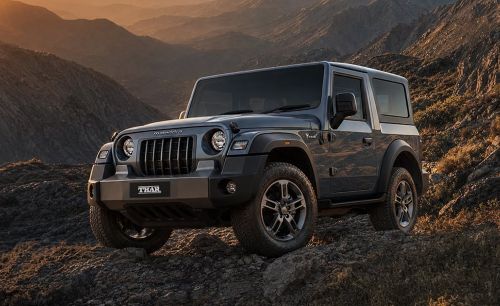
The Mahindra Thar is built for situations where ground clearance has a genuine functional purpose rather than simply contributing to SUV styling.
Its body-on-frame construction, available four-wheel-drive hardware and off-road-oriented geometry make it considerably more capable when roads disappear altogether. High ground clearance helps when crossing rocks, deep ruts, uneven trails and other obstacles.
For buyers who regularly venture beyond paved roads, the Thar offers capabilities that conventional front-wheel-drive crossovers cannot replicate.
Best for: Serious off-road driving and adventure use.
2. Force Gurkha
The Force Gurkha deserves a place near the top whenever rough-road ability is more important than urban sophistication.
Its tall stance, substantial clearance and dedicated 4×4 hardware are intended for difficult terrain. The Gurkha is particularly relevant for buyers travelling through remote regions, mountain routes, farms or trails where ordinary SUVs can struggle.
Its specialised nature also means it is not necessarily the most convenient option for someone whose driving is almost entirely in congested cities.
Best for: Difficult terrain and dedicated off-road use.
3. Toyota Fortuner
The Fortuner has long been popular with buyers who need a large SUV capable of handling a mixture of highways, rough roads and off-road conditions.
Its generous clearance works alongside a body-on-frame platform and available four-wheel-drive system. Toyota continues to position the Fortuner around all-terrain capability, including the newer Neo Drive 48V versions introduced in India.
The Fortuner is expensive compared with compact SUVs, but its combination of road presence, durability and rough-road ability gives it a very different purpose.
Best for: Long-distance touring and demanding road conditions.
4. Mahindra Scorpio-N
The Scorpio-N is another strong choice for buyers who encounter poor roads regularly but still need a practical family SUV.
Mahindra’s body-on-frame SUV is available with petrol and diesel engines, manual and automatic transmissions and optional 4XPLOR four-wheel drive. This combination matters because ground clearance alone cannot provide genuine terrain capability; traction and drivetrain hardware are equally important.
The Scorpio-N also works better as an everyday family vehicle than many dedicated off-roaders.
Best for: Families needing a rugged SUV for mixed road conditions.
5. Mahindra Thar Roxx
The Thar Roxx takes much of the rugged appeal associated with the Thar and packages it into a more family-friendly five-door SUV.
Its raised stance and off-road-focused engineering make it suitable for broken roads and weekend adventures, while easier rear-seat access improves everyday usability compared with a traditional three-door off-roader.
For someone who likes the Thar concept but needs a vehicle capable of serving regular family duties, the Roxx is an important alternative.
Best for: Buyers combining family use with adventure driving.
6. Tata Harrier
You do not necessarily need a traditional body-on-frame SUV simply because your local roads are poor.
The Tata Harrier provides the raised stance expected from a midsize SUV while remaining more road-focused than vehicles such as the Thar and Gurkha. This makes it better suited to families whose challenge is potholes, broken highways and uneven urban roads rather than serious off-roading.
The Harrier.ev further demonstrates Tata’s emphasis on terrain capability, with Tata highlighting its six terrain modes and substantial ground clearance.
Best for: Family highway use and badly surfaced roads.
7. Maruti Suzuki Grand Vitara
The Grand Vitara offers an appealing balance for buyers who need useful clearance but do not want a large, heavy SUV.
Its raised body makes everyday encounters with speed breakers and damaged roads less stressful, while its manageable dimensions remain convenient in cities. The range also offers several powertrain approaches, including strong hybrid, CNG and an ALLGRIP SELECT four-wheel-drive configuration depending on variant.
It is therefore better understood as an efficient everyday SUV with useful rough-road ability rather than a dedicated off-roader.
Best for: City and highway buyers who occasionally encounter rough roads.
8. Toyota Urban Cruiser Hyryder
The Urban Cruiser Hyryder shares much of its underlying engineering with the Grand Vitara and similarly combines useful ground clearance with everyday practicality.
For urban families, this type of midsize SUV can actually make more sense than buying a hardcore off-roader purely for its clearance. It is easier to manoeuvre, generally more economical and better suited to routine commuting.
Strong-hybrid versions are particularly interesting to buyers whose driving involves substantial city traffic.
Best for: Families wanting efficiency and useful road clearance.
9. Renault Kiger
The Renault Kiger demonstrates that useful ground clearance does not require spending on a large SUV.
Its 205 mm ground clearance is generous for a compact crossover, giving drivers greater confidence over rough surfaces and tall speed breakers. At the same time, the Kiger’s sub-four-metre dimensions remain useful when parking or navigating congested streets.
This combination is particularly relevant in Indian cities where compact dimensions and poor-road capability are often required on the same journey.
Best for: Budget-conscious urban buyers dealing with uneven roads.
10. Nissan Magnite
The Nissan Magnite is another compact SUV offering approximately 205 mm of ground clearance.
That figure gives it a practical advantage over many low-slung hatchbacks and sedans when crossing damaged roads or poorly designed speed breakers. Its relatively small exterior footprint means buyers do not have to accept the parking difficulties associated with a large SUV just to gain additional clearance.
For primarily urban use, that balance can be more valuable than maximum off-road ability.
Best for: Affordable city driving with occasional rough-road use.
Is More Ground Clearance Always Better?
Not necessarily.
A high-riding vehicle can clear obstacles more easily, but ground clearance is only one part of vehicle design. Increasing ride height can affect the centre of gravity, aerodynamics and handling characteristics, which engineers compensate for through suspension, tyres, electronic stability systems and chassis tuning.
You should therefore choose clearance according to where you actually drive.
If your routes mainly involve well-maintained city roads, extremely high ground clearance provides limited additional benefit. Around 180–200 mm or more can already provide useful reassurance for typical Indian speed breakers and uneven surfaces, depending on the vehicle’s design.
If you regularly travel on rocky trails, deep ruts or severe unpaved roads, look beyond the specification sheet and consider:
- Approach, departure and breakover angles
- Suspension travel
- Tyre sidewall and wheel size
- Underbody protection
- Two-wheel drive versus four-wheel drive
- Traction and terrain modes
- Water-wading capability
- Ground clearance when the vehicle is loaded
A vehicle’s published ground-clearance figure can also be measured under specific conditions, so comparisons should ideally use manufacturer specifications measured on a comparable basis.
Ground Clearance vs Off-Road Capability
This distinction is important. High ground clearance does not automatically make a car an off-roader.
A front-wheel-drive crossover with 205 mm clearance may comfortably cross a large speed breaker but can still struggle on loose mud or a steep, slippery trail.
A purpose-built SUV combines clearance with traction, suitable tyres, drivetrain hardware and appropriate chassis geometry. The Scorpio-N, for example, offers optional four-wheel drive and terrain-management technology in addition to its SUV construction.
Buy the capability you genuinely need rather than choosing the tallest vehicle solely from a specification comparison.
FAQs
Q1. How much ground clearance is good for Indian roads?
A: Around 180–200 mm or more is generally useful for Indian road conditions, particularly where tall speed breakers and potholes are common. The ideal figure still depends on wheelbase, suspension and where the vehicle is driven.
Q2. Is 200 mm ground clearance enough for bad roads?
A: For most normal broken roads, potholes and speed breakers, approximately 200 mm is usually quite practical. Serious off-road driving requires consideration of several other factors beyond clearance.
Q3. Does ground clearance decrease when the car is fully loaded?
A: The suspension can compress when passengers and luggage are added, effectively reducing available clearance. This is particularly relevant when a fully loaded car crosses a sharp speed breaker or rough surface.
Q4. Should I buy an SUV just for higher ground clearance?
A: Not necessarily. If you primarily drive on normal city roads, a hatchback or sedan with adequate clearance may be more efficient and easier to drive. An SUV becomes more worthwhile when you also need its space, seating position, rough-road ability or drivetrain capability.