Imagine cruising on an expressway when the vehicle ahead suddenly slows. Your car warns you, prepares the brakes and, depending on the system, can automatically apply braking if you fail to react quickly enough. On another journey, the car notices you drifting toward a lane marking and provides steering assistance.
These are examples of Advanced Driver Assistance Systems (ADAS), technology that is rapidly moving from luxury cars into mainstream vehicles in India.
ADAS uses cameras, radar and other sensors to observe the road and assist the driver. Depending on the car, functions can include Automatic Emergency Braking, Adaptive Cruise Control, Lane Keeping Assist, Blind-Spot Collision Warning and Driver Attention Warning.
For Indian buyers interested in this technology, these 10 cars deserve consideration.
1. Hyundai Creta
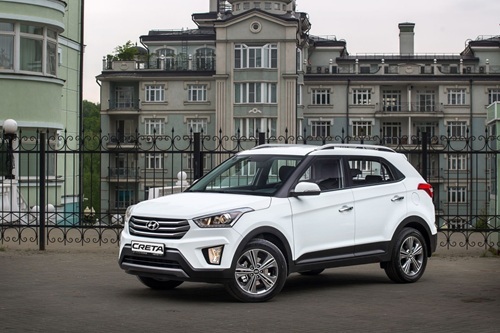
The Hyundai Creta offers one of the more comprehensive ADAS packages among mainstream midsize SUVs.
Selected variants get Hyundai SmartSense Level 2 ADAS with 19 functions. Hyundai lists technologies covering collision avoidance, lane safety and adaptive cruise control.
Important functions include:
- Forward Collision Warning
- Forward Collision-Avoidance Assist
- Lane Keeping Assist
- Lane Following Assist
- Blind-Spot Collision Warning
- Driver Attention Warning
- Smart Cruise Control with Stop & Go
- Rear Cross-Traffic Collision-Avoidance Assist
Higher variants can additionally combine ADAS with a Surround View Monitor and Blind-Spot View Monitor.
Best for: Families wanting a comprehensive ADAS-equipped midsize SUV.
2. Mahindra XUV700
The XUV700 played an important role in making ADAS desirable among mainstream Indian SUV buyers.
Higher variants provide a collection of driver-assistance technologies designed for both collision avoidance and reduced workload during highway journeys.
Features available within its ADAS package include technologies for forward-collision warning, emergency braking, lane assistance and adaptive cruising.
This is particularly valuable in the XUV700 because it is commonly used as a long-distance family SUV. Adaptive driver assistance can reduce repetitive accelerator and steering inputs on suitable expressways.
The combination of strong performance, three-row availability and driver-assistance technology makes it one of the most appealing highway-oriented ADAS SUVs.
Best for: Highway travellers and families wanting a powerful SUV.
3. Honda Elevate
The Elevate brings Honda’s Honda SENSING suite to India’s highly competitive midsize-SUV category.
Its driver-assistance technologies focus on detecting potential hazards and supporting the driver rather than simply adding convenience features.
Honda has also updated the Elevate for 2026, with the facelift arriving in India while retaining the established petrol powertrain.
Depending on variant and current specification, Honda SENSING technology can provide functions covering collision mitigation, lane assistance and adaptive cruising.
The Elevate is particularly attractive to buyers wanting a naturally aspirated petrol engine rather than a turbo-petrol powertrain.
Best for: Buyers wanting Honda SENSING with straightforward petrol ownership.
4. Hyundai Verna
ADAS is not limited to SUVs. The Hyundai Verna demonstrates how sophisticated driver assistance can work particularly well in a highway-oriented sedan.
Selected variants provide Hyundai SmartSense technology with features designed to identify vehicles, pedestrians and other potential hazards.
Its ADAS package includes functions such as lane assistance, collision warning and smart cruise-control technology. Hyundai currently includes the Verna among its Indian models offering Level 2 ADAS technology.
A sedan’s lower driving position and highway-friendly dynamics make the Verna especially interesting for buyers who frequently undertake long intercity journeys.
Best for: Buyers wanting ADAS in a performance-oriented sedan.
5. MG Astor
The MG Astor was one of the earlier mainstream Indian SUVs to make ADAS a prominent part of its identity.
Its driver-assistance package includes technologies such as Adaptive Cruise Control, Lane Keep Assist and Automatic Emergency Braking, depending on the variant.
The Astor is particularly relevant for buyers who want sophisticated technology but prefer a conventional petrol vehicle rather than an EV.
It also demonstrates how quickly ADAS has moved down the market. Features that were once associated mainly with premium European cars are now available in mainstream midsize SUVs.
Best for: Technology-focused petrol-SUV buyers.
6. Hyundai Alcazar
For families requiring six or seven seats, the Hyundai Alcazar offers ADAS technology in a more spacious package.
Higher configurations receive Hyundai SmartSense Level 2 technology. Hyundai highlights functions including lane keeping, collision avoidance and smart cruise control within its current ADAS-equipped range.
Adaptive cruise control can be particularly useful for an Alcazar owner because three-row family SUVs are frequently used for long road trips.
Rear Cross-Traffic Collision-Avoidance technology can also be useful when reversing a relatively large vehicle from crowded parking spaces.
Best for: Large families wanting a three-row SUV with ADAS.
7. Hyundai Creta Electric
Electric cars are increasingly becoming showcases for advanced driver-assistance technology, and the Creta Electric follows that trend.
Selected variants offer Hyundai SmartSense ADAS with a broad collection of functions. Hyundai’s current feature specifications list technologies including:
- Forward Collision Warning
- Forward Collision-Avoidance Assist for cars
- Pedestrian detection
- Cyclist detection
- Junction Turning assistance
- Direct Oncoming assistance
- Blind-Spot Collision Warning
This makes it particularly attractive to buyers who want both electric mobility and modern active-safety technology without moving into a luxury EV.
Best for: Families wanting an ADAS-equipped electric SUV.
8. Mahindra BE 6
The BE 6 represents a newer generation of Indian vehicles in which sophisticated electronics and driver assistance are integrated deeply into the overall platform.
Higher configurations provide advanced driver-assistance functions designed to help with highway cruising, lane positioning and potential collision situations.
The BE 6 is particularly interesting because its ADAS technology accompanies a vehicle designed from the beginning around an electric architecture rather than being an EV conversion of an existing petrol model.
For buyers interested in technology as much as electric range and performance, it is one of the more compelling Indian EVs.
Best for: Technology enthusiasts looking for a performance-focused EV.
9. Mahindra XEV 9e
The XEV 9e takes Mahindra’s new-generation electric technology into a larger and more premium package.
Its higher variants provide an extensive ADAS suite alongside other sophisticated electronic features.
The system is particularly valuable for long-distance driving, where technologies such as adaptive cruise assistance and lane-related functions can help reduce repetitive driver workload.
The XEV 9e therefore suits buyers who want an electric vehicle not simply for lower running costs but also for access to some of the newest automotive technologies available in India.
Best for: Premium EV buyers and frequent highway users.
10. Hyundai Venue
ADAS has now reached the compact-SUV segment as well.
Hyundai’s 2026 ADAS guidance identifies the Venue among its models equipped with driver-assistance technology. The company’s Level 2 explanation highlights systems such as Forward Collision-Avoidance Assist, Lane Keeping Assist and Lane Following Assist across its ADAS range.
This is significant because the Venue’s compact dimensions make it primarily an urban vehicle rather than a large highway SUV.
For buyers who want modern driver-assistance technology but do not need a Creta-sized vehicle, it provides a more city-friendly alternative.
Best for: Urban buyers wanting ADAS in a compact SUV.
Which ADAS Features Are Most Useful?
Manufacturers sometimes advertise ADAS by counting the number of functions, but 20 features are not automatically better than 10 useful ones.
Pay particular attention to these systems.
1. Automatic Emergency Braking
AEB can automatically apply the brakes when the system detects a potential collision and determines that the driver has not reacted sufficiently.
It is one of the most meaningful ADAS functions because it is directly focused on avoiding or reducing the severity of certain collisions.
2. Adaptive Cruise Control
Normal cruise control maintains a selected speed.
Adaptive Cruise Control can additionally adjust the vehicle’s speed according to traffic ahead while maintaining a predetermined following distance.
Systems with Stop & Go capability can be especially useful in suitable slow-moving traffic.
3. Lane Keeping Assist
Lane Keeping Assist can provide steering input when the system determines that the vehicle is unintentionally moving out of its lane.
Its usefulness depends heavily on clearly visible road markings.
4. Blind-Spot Assistance
Blind-spot systems monitor areas beside and behind the vehicle that may be difficult to see through conventional mirrors.
This can be especially useful on multilane roads where motorcycles and smaller vehicles frequently approach alongside the car.
5. Forward Collision Warning
The system monitors the road ahead and warns the driver when it identifies a potential collision risk.
Some vehicles combine the warning with automatic emergency braking.
6. Driver Attention Warning
Driver-monitoring or attention-warning technology attempts to identify behaviour suggesting fatigue or reduced concentration.
It can be particularly relevant during long highway journeys.
What Does Level 2 ADAS Actually Mean?
Level 2 does not mean the car can drive itself.
A Level 2 system can combine automated functions involving steering and acceleration or braking under appropriate operating conditions. Hyundai describes Level 2 ADAS as providing combined assistance while still requiring continuous driver supervision.
The driver therefore remains responsible for the vehicle at all times.
This distinction is particularly important in India, where ADAS may encounter:
- Poor or missing lane markings
- Motorcycles filtering between vehicles
- Pedestrians unexpectedly crossing roads
- Animals on highways
- Incorrectly parked vehicles
- Construction diversions
- Unusual junction layouts
- Heavy rain, fog or dirty sensors
Never assume that an ADAS-equipped vehicle has detected every road user or obstacle.
Should You Buy a Car Just Because It Has ADAS?
No.
ADAS should be treated as an additional layer of assistance, not the foundation of vehicle safety.
Before paying extra for an ADAS-equipped variant, also examine:
- Crash-test performance
- Number and positioning of airbags
- Electronic Stability Control
- Three-point seat belts
- ISOFIX child-seat mounts
- Tyre Pressure Monitoring System
- Braking performance
- Visibility
- Tyre quality
- Structural crash protection
Also compare exactly which ADAS functions are included. Two cars advertised as having “Level 2 ADAS” can provide noticeably different features and operating behaviour.
A proper test drive is therefore important. Try adaptive cruise control and lane assistance in suitable conditions and determine whether the alerts and interventions feel natural to you.
FAQs
Q1. Which cars in India have Level 2 ADAS?
A: Several mainstream vehicles now offer Level 2 technology, including selected versions of the Hyundai Creta, Alcazar, Creta Electric and Verna, along with newer Mahindra models and other competitors. Hyundai officially identifies multiple models in its Indian portfolio as offering Level 2 ADAS.
Q2. Is ADAS useful on Indian roads?
A: Yes, but its effectiveness varies with road conditions. Automatic emergency braking, blind-spot warnings and collision alerts can provide useful additional assistance, while lane-based functions may work less consistently where road markings are poor.
Q3. Can I remove my hands from the steering wheel with Level 2 ADAS?
A: You should not treat Level 2 ADAS as hands-free autonomous driving. The driver must remain attentive, supervise the vehicle and be prepared to take control immediately.
Q4. Is ADAS worth paying extra for?
A: It can be, particularly if the upgrade provides useful functions such as Automatic Emergency Braking, Adaptive Cruise Control and Blind-Spot Assistance. However, strong crash protection and fundamental safety equipment should remain the first priority when choosing a car.