Gold often remains in a family much longer than the paperwork that came with it. Jewellery bought decades ago may have no surviving invoice, while inherited bangles, wedding gifts or ornaments received from parents may never have had a purchase bill in the current owner’s name. This creates a practical question when the owner eventually wants to sell or exchange the gold.
Yes, it is generally legal to sell your legitimately owned old gold jewellery without the original purchase bill in India. A missing bill does not automatically make the gold illegal or prevent a consumer from selling it to a jeweller.
However, the absence of a bill can make it harder to establish the gold’s original purchase price, source, ownership history or purity. The buyer may also require identity documents and carry out its own verification before purchasing the gold.
Does BIS Allow Old Gold Jewellery to Be Sold?
Yes.
The Bureau of Indian Standards specifically states that consumers can sell old hallmarked as well as unhallmarked jewellery lying with them to jewellers.
This is particularly important for old family jewellery because many pieces were purchased before the current hallmarking system or have been passed through generations.
Therefore, your jewellery does not become unsellable merely because:
- It has no HUID;
- It is not hallmarked;
- The original invoice has been lost;
- It was inherited;
- It was received as a wedding gift; or
- It was purchased many years ago.
The jeweller can assess the jewellery and determine whether to purchase it.
Is the Original Purchase Bill Compulsory?
For a consumer selling personal old jewellery, an original purchase invoice is not generally a compulsory document that determines whether the gold can legally be sold.
But having the bill is still extremely useful.
A purchase invoice can help establish:
- When the jewellery was purchased;
- Purchase price;
- Weight;
- Purity;
- Jeweller’s identity; and
- Source of ownership.
These details can become important if there is a tax inquiry or ownership dispute.
A bill is therefore valuable evidence even though losing it does not automatically prohibit the sale.
What If the Gold Is Not Hallmarked?
Old unhallmarked gold can still be sold to a jeweller.
Hallmarking rules governing the commercial sale of jewellery by jewellers should not be confused with a consumer selling their existing personal jewellery back to a jeweller.
The buyer may test the jewellery’s purity before determining its value.
The amount offered can depend on factors such as:
- Actual gold purity;
- Net gold weight;
- Stones or non-gold components;
- Prevailing gold rate;
- Melting or testing deductions; and
- Buyback policy of the jeweller.
Therefore, the price originally paid for jewellery is not necessarily the amount you will receive when selling it.
Can You Test Old Gold Before Selling It?
Yes.
If you are unsure about purity, BIS provides a mechanism through which consumers can have hallmarked or unhallmarked jewellery tested at a BIS-recognised Assaying and Hallmarking Centre.
An assay report can provide information about the tested article’s purity.
This can be particularly useful when:
- The jewellery has no bill;
- It has no hallmark;
- It is very old;
- You do not know its carat value; or
- You want an independent purity assessment before negotiating with a buyer.
Getting an independent assessment can reduce disputes over purity.
What If the Jewellery Was Inherited?
Inherited jewellery can also be sold.
The fact that the current owner does not have the original purchase invoice is understandable where the jewellery belonged to parents, grandparents or other family members.
However, for valuable inherited jewellery, preserve whatever evidence is available regarding its source.
Depending on the circumstances, useful evidence could include:
- Will;
- Probate or succession documents;
- Family settlement;
- Gift documentation;
- Old valuation reports;
- Wealth-tax records;
- Old photographs;
- Insurance records;
- Previous bills; or
- Other documents showing family ownership.
There is no requirement that every inherited ornament must have its decades-old retail invoice before it can ever be sold.
What If the Gold Was Received as a Wedding Gift?
Gold jewellery received as a genuine wedding gift may also be sold later.
Again, the absence of a purchase invoice in your own name is not unusual because you were not the original purchaser.
However, documentation can become important where the quantity or value is substantial.
If available, preserve records that can reasonably explain how the jewellery came into your possession.
This becomes especially useful if significant assets or sale proceeds later require explanation for income-tax purposes.
Will a Jeweller Ask for PAN or Aadhaar?
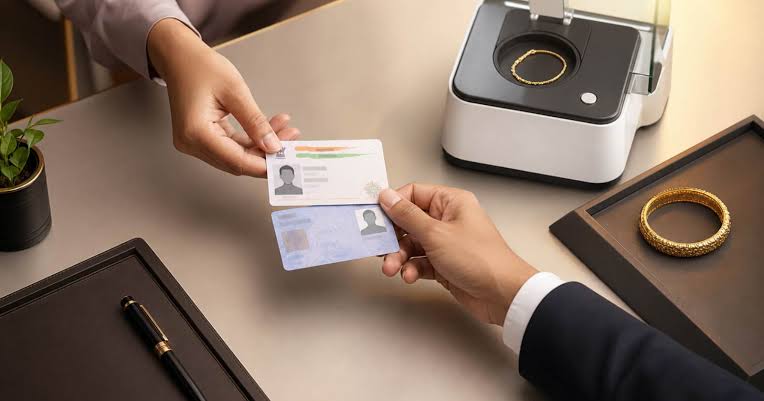
A reputable gold buyer may ask for identity and KYC documentation, particularly for significant transactions or where its internal compliance procedures require verification.
The exact documents requested can depend on:
- Transaction value;
- Nature of the buyer;
- Applicable tax/KYC requirements; and
- Internal compliance policies.
A jeweller may ask for documents such as PAN or another accepted identity/address document.
This should not be confused with the original jewellery purchase bill.
Your identity documents establish who is selling the gold; the old invoice establishes information about the original purchase.
They serve different purposes.
Can a Jeweller Refuse to Buy Gold Without a Bill?
Yes.
The fact that the law does not generally prohibit a consumer from selling old jewellery without its original bill does not necessarily force every private jeweller to purchase it.
A jeweller may have an internal buyback policy requiring additional documentation.
This can be particularly relevant where:
- The value is unusually high;
- Ownership appears doubtful;
- The seller refuses KYC;
- The jewellery appears suspicious;
- The buyer cannot reasonably verify the transaction; or
- Anti-fraud procedures require further documentation.
Therefore, “legal to sell” and “every jeweller must buy it” are not the same thing.
Can You Sell Gold That Belongs to Someone Else?
Not merely because you physically possess it.
You should have lawful ownership or proper authority to sell the jewellery.
For example, secretly selling jewellery belonging to:
- Your spouse;
- Parents;
- Employer;
- Customer;
- Another family member; or
- Any other person
without legal authority can create serious civil or criminal consequences.
A missing bill is one issue. Lack of ownership is a completely different issue.
The ability to prove lawful ownership becomes particularly important when valuable jewellery is involved.
What If the Gold Is Stolen?
A person cannot acquire a lawful right to sell jewellery merely by possessing stolen property.
Jewellers and gold buyers should be cautious about suspicious transactions, and law-enforcement action can follow where property is connected with theft or another offence.
This is another reason reputable buyers may record seller identity and transaction details.
If you are selling inherited or otherwise legitimately acquired high-value jewellery without a bill, maintaining alternative evidence of ownership can prevent unnecessary complications.
Is GST Charged When an Individual Sells Old Personal Jewellery?
A private individual occasionally selling personal old jewellery is different from a business regularly trading in gold.
The Government has previously clarified under GST that the sale of old gold jewellery by an individual to a jeweller does not, merely because consideration is received, become a business supply by that individual.
However, the position can be different where someone is actually engaged in the business of buying and selling gold.
Therefore, a household selling an old necklace should not automatically be treated in the same manner as a commercial gold trader.
Is Tax Payable When You Sell Old Gold?
Selling personal gold can have income-tax consequences if there is a taxable gain.
Gold jewellery is generally treated as a capital asset for income-tax purposes.
The tax calculation can depend on matters including:
- How the gold was acquired;
- Original cost;
- Date of acquisition;
- Whether it was inherited or gifted;
- Applicable holding period; and
- Sale consideration.
This is where a missing bill can become inconvenient.
The absence of an invoice does not automatically prohibit the sale, but it can make establishing the acquisition cost more difficult.
For inherited or gifted jewellery, special cost-of-acquisition rules can apply, so the original owner’s acquisition history may become relevant.
For substantial transactions, tax advice may be worthwhile before the sale.
Should You Accept the Sale Price in Cash?
Large cash transactions should be avoided.
India’s income-tax law contains restrictions on high-value cash receipts.
Therefore, if you are selling expensive gold, receiving the sale proceeds through a traceable banking channel is generally safer.
For example:
- Bank transfer;
- Account-payee cheque; or
- Other permitted electronic banking mode
provides much clearer evidence of the transaction.
Also obtain a proper purchase receipt from the jeweller showing relevant details of the gold sold and amount paid.
What Proof Should You Take From the Jeweller?
Even if you do not have the original purchase bill, you should obtain documentation for the new sale transaction.
Ask for a receipt or purchase document showing relevant details such as:
- Jeweller/buyer’s name;
- Date;
- Description of jewellery;
- Gross and/or net weight as applicable;
- Purity determined;
- Rate applied;
- Deductions;
- Final amount payable; and
- Payment method.
Read the document before signing it.
Do not hand over valuable jewellery without receiving clear documentation showing what was accepted and how the final price was calculated.
Can You Exchange Old Gold for New Jewellery Without the Original Bill?
Many jewellers offer old-gold exchange schemes.
Whether a particular jeweller accepts jewellery purchased elsewhere or without an invoice depends partly on its policy.
The old jewellery may be tested for purity and valued according to the jeweller’s exchange terms.
When buying the new jewellery, however, obtain a proper invoice containing the required details.
Do not repeat the same problem by purchasing expensive new jewellery without keeping its bill.
What Should You Do Before Selling Old Gold Without a Bill?
If the original invoice is unavailable:
- Confirm that you have lawful ownership of the jewellery.
- Collect any alternative ownership records available.
- Check whether the jewellery carries a hallmark or HUID.
- Consider independent purity testing for valuable items.
- Compare quotations from reputable jewellers.
- Understand deductions for stones, impurities or melting.
- Carry appropriate KYC documents.
- Prefer bank payment for substantial sale proceeds.
- Obtain a proper receipt for the sale.
- Preserve the receipt and payment record permanently.
- Consider tax implications if the value or capital gain is substantial.
The important distinction is that a bill helps prove the history and cost of gold, but it is not what creates ownership of every piece of old family jewellery. Legitimately owned old gold can generally be sold even where the original invoice has been lost or never existed, although proper identification, documentation and tax records become increasingly important as the value of the transaction rises.
FAQs
Q1. Can I sell my mother’s old gold jewellery if there is no bill?
A. Yes, if you have lawfully inherited or otherwise acquired ownership of the jewellery. For valuable items, preserve inheritance, gift or other available records that help establish how the jewellery came into your possession.
Q2. Can I sell unhallmarked old gold to a jeweller?
A. Yes. BIS specifically permits consumers to sell old hallmarked or unhallmarked jewellery to jewellers. The jeweller can test the jewellery and determine its purity before purchasing it.
Q3. Will I have to pay tax when I sell old gold without a bill?
A. A taxable capital gain can arise from the sale of gold regardless of whether the original bill is available. The missing invoice can make proving the acquisition cost more difficult, particularly for old or inherited jewellery.
Q4. Should I take a bill when selling my old gold?
A. Yes. Even if you do not have the original purchase invoice, obtain a proper receipt or purchase document from the buyer for the current transaction. It can help establish the weight, purity, sale value, date and payment received.