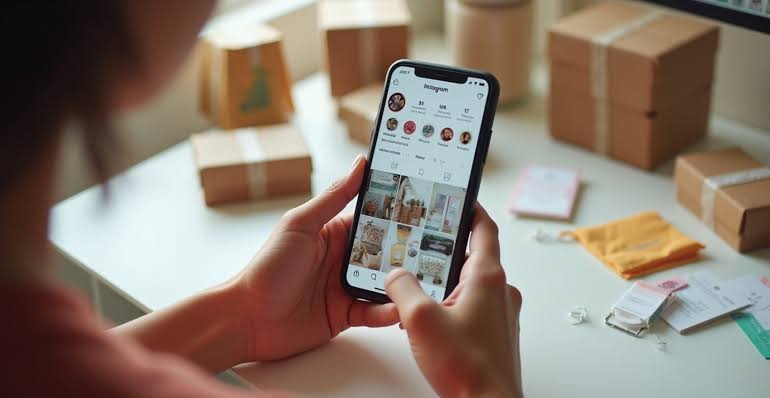
Instagram has become a storefront for thousands of small Indian businesses. Clothing boutiques upload new collections through Reels, home bakers accept cake orders through DMs, jewellery sellers display products in Stories, and handmade-product businesses may operate entirely through social media without maintaining a traditional shop.
Yes, it is legal to sell products through Instagram in India. You do not need a physical shop merely because you are selling goods commercially. However, an Instagram business is still a business, and the laws applicable to the product, taxation, consumer protection, packaging, food safety and other regulated activities continue to apply.
In other words, accepting orders through DMs does not make a commercial transaction informal or outside the law.
Do You Need to Register a Company to Sell on Instagram?
Not necessarily.
A person starting a small Instagram business can operate as a sole proprietorship without incorporating a private limited company or LLP.
As the business develops, other structures may be considered, such as:
- Partnership;
- Limited Liability Partnership (LLP);
- One Person Company (OPC); or
- Private Limited Company.
The appropriate structure depends on factors such as ownership, scale, liability, taxation, investment plans and number of founders.
A company registration should therefore not be confused with permission to sell products online.
Do You Need GST Registration to Sell on Instagram?
Not automatically.
GST registration depends on the applicable provisions of the GST law, including:
- Aggregate turnover;
- Whether you supply goods or services;
- State or Union Territory;
- Nature of supplies;
- Whether supplies are intra-State or inter-State; and
- Whether any compulsory-registration provision applies.
For persons engaged exclusively in supplying goods, an enhanced registration threshold of ₹40 lakh applies in States and Union Territories covered by the relevant notification, while lower thresholds apply in specified jurisdictions and circumstances.
Therefore, a small seller does not automatically require a GSTIN merely because customers discover products through Instagram.
However, GST liability should be reviewed before expanding sales across India or crossing the applicable turnover threshold.
Is Instagram the Same as an E-Commerce Marketplace for GST?
Not necessarily.
There is an important practical distinction between using Instagram primarily to advertise products and using an e-commerce operator that actually facilitates supplies in the manner contemplated under GST law.
For example, suppose you:
- Upload photographs of handmade jewellery on Instagram.
- A customer sends you a DM.
- You provide your UPI details.
- The customer pays you directly.
- You independently arrange delivery.
The GST analysis should be based on the actual transaction and applicable registration provisions rather than simply assuming that having an Instagram account automatically makes you a marketplace seller.
This differs from selling through a marketplace that operates as an e-commerce operator under the GST framework.
Can You Sell Through Instagram Without a Website?
Yes.
Indian law does not generally require a small seller to create a standalone website before selling products online.
You can potentially accept orders through:
- Instagram DMs;
- WhatsApp;
- Email;
- Telephone; or
- Other online communication methods.
However, using only social media makes transparent business information especially important.
Customers should be able to understand who is selling the product, what they are purchasing, how much it costs and how problems will be handled.
Do Consumer Protection Laws Apply to Instagram Sellers?
Yes, commercial online selling can attract consumer-protection obligations.
The Consumer Protection Act, 2019 protects consumers against matters such as unfair trade practices, defective goods, deficient services and misleading representations.
The Consumer Protection (E-Commerce) Rules, 2020 also apply broadly to goods and services bought or sold over digital or electronic networks, subject to their scope and exceptions.
An Instagram seller should therefore avoid practices such as:
- Posting misleading product descriptions;
- Using photographs that materially misrepresent the actual product;
- Making false quality claims;
- Advertising fake discounts;
- Concealing important product conditions;
- Refusing to address legitimate complaints; or
- Misrepresenting the identity of the seller.
A statement such as “DM to order” does not remove consumer rights.
Do You Need to Display Product Prices?
Customers should receive clear and accurate information about what they are purchasing.
If you sell pre-packaged commodities, the Legal Metrology (Packaged Commodities) Rules, 2011 can require declarations on the package such as applicable details concerning:
- Manufacturer, packer or importer;
- Common or generic name of the commodity;
- Net quantity;
- Maximum retail price;
- Consumer-care information; and
- Other prescribed particulars.
The exact requirements depend on the product and packaging.
Therefore, an attractive Instagram product photograph cannot substitute for legally required declarations on packaged goods.
Can You Sell Homemade Food on Instagram?
Yes, but food businesses have additional legal obligations.
If you make and sell cakes, chocolates, pickles, snacks, sauces, meals or other food products through Instagram, the Food Safety and Standards Act, 2006 and FSSAI regulatory framework become relevant.
Food Business Operators must obtain the appropriate FSSAI registration or licence applicable to their business.
Depending on the nature and scale of operations, this can include home-based food businesses.
Food sellers also need to follow applicable rules concerning:
- Hygiene;
- Food safety;
- Packaging;
- Labelling;
- Ingredients;
- Allergen information where applicable; and
- Product claims.
Calling yourself a “home baker” does not create an exemption from food-safety law.
Can You Sell Cosmetics Through Instagram?
Cosmetics require greater care because they are regulated products.
If you manufacture, import or sell products such as lipstick, skincare preparations, creams or other cosmetics, applicable requirements under the Drugs and Cosmetics Act, 1940 and Cosmetics Rules, 2020 need to be considered.
Products should be lawfully manufactured or imported and carry the required labelling.
An Instagram seller should be particularly cautious about:
- Unlicensed or unlawfully manufactured cosmetics;
- Counterfeit branded products;
- Missing ingredient or manufacturer information;
- Imported products without appropriate compliance; and
- Unsupported medical or therapeutic claims.
Buying bulk cosmetic products and repacking them under your own Instagram brand can create additional regulatory obligations.
Can You Resell Branded Products?
Reselling genuine products is different from selling counterfeit goods.
If you purchase genuine products through lawful channels and resell them, you should retain invoices and supplier records.
Problems arise when a seller uses another company’s trademark to make counterfeit or imitation products appear genuine.
Selling fake branded handbags, shoes, cosmetics, watches or other goods can create serious trademark, consumer-protection and potentially other legal consequences.
Do not describe a product as “original” unless you can substantiate that claim.
Can You Use Photos From Google or Another Instagram Account?
This is another common mistake.
Finding a photograph online does not automatically make it free for commercial use.
Product photographs, graphics and promotional material can be protected by copyright.
Similarly, using another business’s logo, catalogue photographs or promotional videos without permission can create intellectual-property issues.
For a long-term Instagram business, use:
- Your own product photographs;
- Properly licensed images;
- Supplier photographs you are authorised to use; or
- Original graphics created for your business.
This also improves customer trust because buyers can see the actual product they will receive.
Do You Need a Return and Refund Policy?
A clear return, replacement, cancellation and refund policy is highly advisable.
Your Instagram page or linked ordering system should explain issues such as:
- Whether returns are accepted;
- Return period;
- Conditions for returning products;
- Treatment of defective or incorrect goods;
- Cancellation rules;
- Refund method; and
- Customer-support contact details.
However, simply writing “No Return, No Refund” does not automatically eliminate rights that consumers may have under applicable law where goods are defective, misrepresented or the transaction involves an unfair trade practice.
Business policies operate subject to consumer law.
Can You Accept UPI Payments for Instagram Orders?
Yes.
UPI, bank transfers and other lawful payment methods can be used to receive business payments.
But business owners should maintain proper records.
Keep records of:
- Orders;
- Customer invoices;
- UPI receipts;
- Bank transactions;
- Shipping details;
- Refunds;
- Returns; and
- Purchase invoices from suppliers.
As order volume grows, relying entirely on Instagram messages to track transactions becomes risky.
Proper accounting records also help with GST and income-tax compliance.
Does Instagram Income Need to Be Reported for Income Tax?
Yes, where applicable.
Selling through social media does not make business profits tax-free.
Income from the business must be considered under the applicable provisions of income-tax law.
GST registration and income-tax liability are separate matters.
You may therefore have a business that is not required to register for GST but still has taxable business income that must be properly reported.
What If You Sell From Home?
Many Instagram businesses operate from residential premises.
This can be possible, particularly for low-impact online activities, but local rules should still be checked.
A person storing a few handmade products at home is in a very different position from someone operating:
- A manufacturing workshop;
- Large warehouse;
- Commercial kitchen;
- Business employing many workers; or
- Customer-facing retail operation
inside a residential property.
Municipal, zoning, society, fire-safety or other local requirements may apply depending on the activity.
What Should You Do Before Starting an Instagram Store?
Before accepting regular orders:
- Decide who legally owns and operates the business.
- Maintain a separate record of business transactions.
- Check whether GST registration is required.
- Obtain FSSAI registration/licence if selling food.
- Check product-specific licences for regulated goods.
- Ensure packaged products carry required declarations.
- Use accurate descriptions and genuine product photographs.
- Avoid misleading advertisements and unsupported claims.
- Clearly communicate prices and important terms.
- Create a transparent return/refund policy.
- Keep supplier and purchase invoices.
- Do not sell counterfeit products.
- Protect customer personal information.
- Keep records of sales, payments, shipping and refunds.
Instagram can legally be the main sales channel of a genuine business. The important distinction is that selling through social media changes how customers find you—it does not remove the laws that would apply to the same products if they were sold through a website or physical store.
FAQs
Q1. Can I sell products on Instagram without GST registration?
A. Yes, in situations where GST law does not require you to register. Registration depends on factors such as aggregate turnover, nature of supplies, location and applicable compulsory-registration provisions. Using Instagram alone does not automatically create a GST-registration requirement.
Q2. Do I need a company to start an Instagram business?
A. No. A small seller can potentially operate as a sole proprietor without incorporating a company. Other registrations or licences may still be required depending on the products being sold.
Q3. Can I sell homemade cakes and food through Instagram?
A. Yes, but a commercial food business must comply with the applicable FSSAI registration or licensing requirements and food-safety, hygiene, packaging and labelling rules.
Q4. Can I write “No Return, No Refund” on my Instagram page?
A. You can state your normal commercial return policy, but such a statement does not automatically override statutory consumer rights concerning defective, misrepresented or otherwise legally problematic goods.