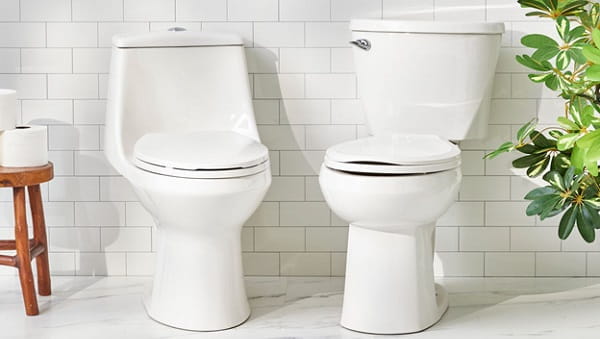
A ceramic wash basin begins its journey as a carefully controlled mixture of minerals and water. Before it becomes a smooth, glossy bathroom fixture, the material must be prepared, shaped, dried, glazed and fired at extremely high temperatures. Each stage affects the strength, appearance and performance of the finished product.
Manufacturing sanitaryware is considerably more complex than simply moulding clay into a desired shape. Modern factories combine ceramic engineering, specialised machinery and quality inspections to produce toilets, wash basins, urinals and other bathroom fixtures.
Understanding how sanitaryware is manufactured from raw clay also explains why some ceramic products have better surface finishes, more consistent dimensions and greater resistance to moisture than others.

Sanitaryware Begins With More Than Ordinary Clay
The ceramic body used for sanitaryware usually contains several mineral ingredients rather than a single type of clay.
Each material contributes a particular property during forming or firing.
| Raw Material | Main Function |
|---|---|
| Ball clay | Improves plasticity and binding properties |
| Kaolin (china clay) | Contributes to ceramic structure and whiteness |
| Feldspar | Helps materials fuse during firing |
| Quartz or silica | Supports dimensional stability and body composition |
| Water | Creates a workable casting mixture |
The exact formulation depends on whether the manufacturer produces vitreous china, fine fireclay or another ceramic sanitaryware body.
Raw materials must be selected carefully because impurities can affect colour, firing behaviour and the final surface quality.
From Dry Minerals to Liquid Ceramic Slip
Unlike traditional pottery, many sanitaryware products are not shaped directly from a lump of wet clay.
Instead, manufacturers commonly prepare a liquid suspension called ceramic slip.
Measured quantities of clay, feldspar, silica and other ingredients are mixed with water.
The mixture may pass through grinding and mixing equipment to achieve the required particle distribution and consistency.
Special additives, known as deflocculants, can help the particles remain dispersed while limiting the amount of water required.
This matters because excessive water can increase drying time and contribute to shrinkage problems.
The prepared slip is then screened and processed to remove unwanted particles and trapped air.
Factories monitor properties such as density, viscosity and casting behaviour before releasing the slip for production.
Casting: Giving Sanitaryware Its Shape
One of the most important manufacturing stages is casting.
Sanitaryware often has complex shapes, including internal passages, curved surfaces and hollow sections that cannot be produced easily through conventional pressing.
Two casting methods are commonly used.
Traditional Plaster Mould Casting
In conventional slip casting, liquid ceramic slip is poured into porous plaster moulds.
The plaster absorbs water from the slip, causing a layer of ceramic material to form against the mould surface.
Once the required thickness develops, excess slip may be drained from suitable hollow-casting moulds.
The formed piece is allowed to strengthen before removal.
Plaster moulds are relatively economical but require drying and maintenance between production cycles.
High-Pressure Casting
Modern factories may use high-pressure casting systems with specialised porous resin moulds.
Pressure assists water removal and helps the ceramic body form more rapidly.
These systems can improve production consistency and reduce casting cycle times.
However, they require substantial equipment investment and careful process control.
The choice of casting method depends on production volume, product complexity and factory capabilities.
Finishing the Unfired Ceramic Body
Freshly cast sanitaryware is relatively fragile.
At this stage, the product is often described as being in its green or unfired condition.
Workers or automated equipment remove casting seams, excess material and surface irregularities.
Openings for taps, drainage connections and fittings are formed according to the product design.
For toilets, particular attention is given to internal water passages and waste outlets.
Some products contain separately cast components that must be joined while the ceramic material remains workable.
These connections require careful finishing because defects may become visible or structurally significant after firing.
Drying: A Critical Stage That Cannot Be Rushed
Before glazing and firing, the ceramic body must lose much of its remaining moisture.
Drying is carefully controlled because uneven moisture removal can cause warping or cracking.
Large sanitaryware products are particularly sensitive to differences in drying rates between thick and thin sections.
Factories may use controlled drying chambers where temperature, humidity and airflow are regulated.
The drying process also causes the ceramic body to shrink.
Manufacturers account for expected shrinkage when designing mould dimensions.
If drying conditions are poorly controlled, a product may become distorted before it reaches the kiln.
Glazing Creates the Finished Surface
Glazing gives ceramic sanitaryware its characteristic smooth, attractive and easily cleaned surface.
A glaze is a formulated mixture of glass-forming materials and other ingredients.
It is commonly applied to the dried ceramic body through spraying or other controlled methods.
During firing, the glaze melts and develops into a glassy surface layer.
Depending on the formulation, it can provide colour, gloss and resistance to staining.
Glaze thickness must be carefully controlled.
Uneven application may produce defects such as pinholes, runs, exposed areas or variations in appearance.
Manufacturers also need to ensure compatibility between the glaze and ceramic body to reduce the risk of cracking or crazing.
Kiln Firing Transforms Clay Into Ceramic
Firing is the stage where the shaped and glazed body undergoes its most significant transformation.
Sanitaryware is heated in industrial kilns, often at temperatures around 1,200°C or higher, depending on the ceramic formulation and production process.
As the temperature rises, several changes occur.
Remaining moisture is removed, clay minerals undergo chemical transformations, and suitable components begin to fuse.
This process, known as vitrification, helps create a dense ceramic structure.
The glaze also melts and bonds to the surface.
Firing schedules must control heating, soaking and cooling conditions.
Excessive or uneven heating can cause deformation, cracking and other defects.
Once firing is complete, the product is cooled under controlled conditions before inspection.
Quality Testing Before Sanitaryware Reaches the Market
A sanitaryware fixture must meet more than visual expectations.
Manufacturers inspect finished products for cracks, glaze defects, dimensional accuracy and surface irregularities.
Depending on the product and applicable standards, testing may include water absorption, load resistance, leakage and functional performance.
Toilets may undergo flushing and water-seal performance tests.
Wash basins may be checked for dimensional consistency and proper fitting locations.
Products that fail inspection may be rejected or classified according to the manufacturer’s quality procedures.
The applicable product standard determines the specific acceptance criteria.
Why Manufacturing Quality Matters to Homeowners
Two ceramic wash basins may appear nearly identical in a showroom but differ in manufacturing consistency.
Poorly controlled casting can create dimensional variations.
Inadequate drying may contribute to hidden structural weaknesses, while glazing defects can affect appearance and cleanability.
Firing quality influences the ceramic body’s density and water absorption.
For buyers, it is useful to examine the surface finish, check installation dimensions and select products that comply with relevant quality standards.
A well-manufactured sanitaryware product combines careful material selection with controlled processing at every stage.
Frequently Asked Questions
Q1. What type of clay is used to manufacture sanitaryware?
A. Sanitaryware commonly uses ceramic body formulations containing ball clay, kaolin, feldspar and silica. The proportions vary according to the product and manufacturing process.
Q2. At what temperature is sanitaryware fired?
A. Many vitreous china sanitaryware products are fired at approximately 1,200°C or above. The exact temperature depends on the ceramic composition, glaze and kiln process.
Q3. Why is sanitaryware glazed?
A. Glazing produces a smooth, glassy surface that improves appearance and helps resist staining and moisture penetration. Proper glaze application and firing are essential for consistent results.
Q4. What is the difference between plaster casting and pressure casting?
A. Plaster casting uses porous moulds to absorb water from ceramic slip, while pressure casting uses specialised mould systems and applied pressure to accelerate forming. Both methods can produce sanitaryware when properly controlled.
Q5. Why do ceramic sanitaryware products sometimes crack during manufacturing?
A. Cracks may result from uneven drying, unsuitable material composition, casting defects, thermal stress or incorrect firing conditions. Manufacturers control these variables to reduce production failures.