A bathroom floor has to do something that most other floors do not: provide reliable footing while regularly exposed to water. Shower splashes, soap residue, shampoo and moisture from wet feet can all make the surface slippery. A tile that feels perfectly safe when dry may behave very differently after a shower.
This makes flooring selection a critical part of bathroom design. Homeowners often compare tiles based on colour, size, finish and price, but slip resistance deserves equal attention.
Anti-skid tiles are designed to provide better traction under specified conditions, helping reduce the likelihood of slipping on wet bathroom floors. They are particularly valuable in shower areas, family bathrooms and spaces used by older adults or people with mobility difficulties.
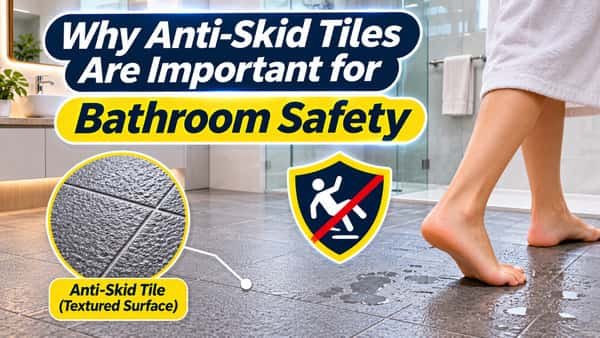
Understanding how these tiles work, what their ratings mean and where they should be installed can help homeowners make safer flooring decisions.
What Makes Bathroom Floors Slippery?
Bathroom slips rarely result from water alone. Several conditions can combine to reduce the friction between footwear or bare feet and the floor.
A smooth tile surface may offer limited grip when covered by a thin layer of water. Soap and shampoo residue can further reduce traction.
Other contributing factors include poor drainage, standing water, unsuitable footwear and uneven floor levels.
Even a textured tile can become slippery when dirt or cleaning-product residue accumulates.
For this reason, bathroom safety depends on both the flooring material and how the space is designed and maintained.
How Anti-Skid Tiles Improve Floor Grip
Anti-skid tiles are manufactured or finished to provide greater slip resistance than many conventional smooth tiles.
Their surfaces may contain fine textures, structured patterns or other treatments that improve contact with the foot.
The objective is to provide sufficient friction during normal movement, particularly when moisture is present.
However, anti-skid does not mean slip-proof.
No bathroom tile can guarantee complete protection against falls under every condition.
Actual performance depends on surface texture, water, soap contamination, footwear, cleaning practices and installation quality.
This is why choosing a suitable tested product is more reliable than judging slip resistance by appearance alone.
Why Anti-Skid Tiles Matter in Everyday Bathrooms
Safer Movement on Wet Floors
Bathrooms frequently contain water around showers, wash basins and bathing areas.
A floor with suitable wet slip resistance can help users maintain better footing when walking across these surfaces.
This is especially important when moving between the shower and the dry area.
Better Protection for Older Adults
Some older adults may have reduced balance, strength or mobility.
A slippery bathroom surface can increase the difficulty of everyday activities such as bathing and using the toilet.
Slip-resistant flooring can form one part of a safer bathroom design, alongside appropriate grab bars, lighting and accessible layouts.
Practical for Family Bathrooms
Children may move quickly or step onto wet floors without noticing the surface condition.
Choosing suitable bathroom tiles can help reduce unnecessary slipping hazards.
However, supervision and good housekeeping remain important.
Improved Safety in Shower Areas
Shower floors are exposed to water more frequently than many other bathroom surfaces.
They may also collect soap and shampoo residue.
Selecting tiles specifically suitable for wet barefoot conditions is therefore particularly important.
Understanding Bathroom Tile Slip-Resistance Ratings
A tile labelled anti-skid does not necessarily provide enough information about its tested performance.
Different testing systems measure slip resistance under different conditions.
Some manufacturers provide R ratings based on ramp testing with footwear under specified conditions.
Other tests evaluate barefoot slip resistance on wet surfaces.
A separate testing method may measure dynamic coefficient of friction.
These systems are not directly interchangeable.
| Rating or Test | What It Generally Evaluates | Important Consideration |
|---|---|---|
| R9–R13 classification | Slip resistance in specified shod-foot ramp conditions | Does not directly establish wet barefoot suitability |
| Barefoot A, B and C classification | Performance in specified wet barefoot conditions | Particularly relevant to bathing and shower areas |
| Dynamic coefficient of friction testing | Friction under defined test conditions | Results depend on the method and surface conditions |
For a residential shower, ask the supplier whether the tile has been tested for wet barefoot use.
Avoid assuming that a higher R rating automatically makes a tile suitable for every bathroom application.
Which Types of Anti-Skid Tiles Work Best?
Several tile materials can be manufactured with slip-resistant finishes.
Textured Porcelain Tiles
Porcelain tiles are widely used in bathrooms because of their durability and low water absorption.
Textured porcelain products can provide useful slip resistance when designed and tested for wet flooring applications.
They are available in stone-look, concrete-look and other decorative finishes.
Matte Ceramic Tiles
Some matte ceramic tiles offer better traction than highly polished alternatives.
However, matte appearance alone does not guarantee slip resistance.
The product’s tested performance should be checked before installation.
Mosaic Tiles
Small mosaic tiles create more grout joints across the floor.
These joints may contribute to traction, although the result depends on the tile surface, grout profile and overall installation.
Mosaics are also useful for certain shower floors because smaller pieces can accommodate drainage slopes.
Structured Surface Tiles
Some tiles have intentionally raised or patterned surfaces.
These can improve grip but may require more attention during cleaning because dirt can collect within the texture.
Anti-Skid Tiles vs Glossy Tiles
Glossy tiles are popular because they reflect light and create a polished appearance.
However, highly polished floor tiles may become slippery when wet, depending on their material and tested properties.
Anti-skid tiles are generally selected for their functional surface characteristics rather than maximum shine.
For bathrooms, it is often practical to use decorative glossy tiles on walls while selecting appropriately slip-resistant tiles for the floor.
This allows homeowners to achieve the desired appearance without compromising the flooring specification.
Installation Matters as Much as Tile Selection
Even suitable anti-skid tiles may not perform well if the bathroom is poorly constructed.
The floor should have an appropriate slope towards the drainage outlet.
Standing water can increase slipping hazards and encourage residue accumulation.
Uneven tiles, raised edges and poorly finished joints may also create tripping risks.
In shower areas, waterproofing and drainage must be coordinated with the tile installation.
A qualified installer should follow the tile manufacturer’s instructions and relevant building requirements.
How to Maintain Anti-Skid Bathroom Tiles
Slip-resistant surfaces require regular cleaning to maintain their intended performance.
Soap residue, body oils and cleaning-product deposits can reduce traction over time.
Use a cleaning product suitable for the tile and grout.
Avoid applying waxes or polishing treatments that may create a slippery film.
Textured surfaces may benefit from cleaning with a soft brush to remove deposits from small grooves.
Rinse away cleaning solutions thoroughly and address drainage problems that allow water to remain on the floor.
Common Mistakes When Buying Bathroom Floor Tiles
One mistake is selecting tiles solely because the packaging describes them as anti-skid.
Without suitable testing information, it may be difficult to determine whether the product is appropriate for a shower or wet bathroom.
Another mistake is choosing a very rough surface without considering comfort and cleaning requirements.
Extremely textured flooring may be uncomfortable under bare feet or difficult to maintain.
Homeowners should also avoid assuming that all tiles from the same collection have identical slip-resistance properties.
Different finishes within a product range may perform differently.
The safest approach is to match the specific tile’s tested characteristics to the intended installation area.
Frequently Asked Questions
Q1. Are anti-skid tiles necessary for bathroom floors?
A. Slip-resistant flooring is strongly recommended for wet bathroom areas because it can help reduce slipping hazards. Exact requirements depend on the building’s applicable standards and intended use.
Q2. Are matte tiles always anti-skid?
A. No. A matte finish does not automatically guarantee suitable slip resistance. Buyers should check the manufacturer’s test results and intended application.
Q3. Which tiles are best for shower floors?
A. Tiles tested for wet barefoot slip resistance are appropriate candidates for shower floors. Textured porcelain and suitable mosaics are common options, provided they meet the installation requirements.
Q4. Can anti-skid tiles become slippery?
A. Yes. Soap residue, oils, standing water and unsuitable cleaning products can reduce traction. Regular maintenance and proper drainage remain essential.
Q5. Are anti-skid tiles difficult to clean?
A. Cleaning requirements depend on the surface texture. Lightly textured tiles may be straightforward to maintain, while deeply structured surfaces can require additional brushing to remove accumulated residue.